• anna j. clutterbuck-cook
  • contact
  • curriculum vitae
  • find me elsewhere
  • marilyn ross memorial book prize

the feminist librarian

the feminist librarian

Tag Archives: work-life balance

booknotes: families apart

26 Thursday Apr 2012

Posted by Anna Clutterbuck-Cook in book reviews

≈ Leave a comment

Tags

being the change, children, human rights, politics, sociology, work-life balance

The University of Minnesota Press was kind enough to send me a review copy of Geraldine Pratt’s fascinating study of migrant domestic workers and their families who have traveled from the Philippines to Canada as part of Canada’s Live-in Caregiver Program (LCP). Families Apart: Migrant Mothers and the Conflicts of Labor and Love (University of Minnesota, 2012) is the result of Pratt’s collaboration with the Philippine Women Centre of British Columbia. With the assistance of the PWC, Pratt identified and interviewed twenty-seven families: mothers (the primary LCP participants), children, and sometimes partners, who have emigrated to Canada in hopes of economic and social mobility. Families Apart draws on these interviews, with analysis and reference to the relevant bodies of literature, to explore and theorize the long-term effects of the LCP on family relationships.

I came at this book from several perspectives: that of a former care provider (though in very different circumstances from those of the LCP participants), that of a family member, that of a feminist, and that of an oral historian. I want to talk briefly about each of these lenses through which I considered Pratt’s work, and suggest that her research is of potential worth to those with a personal, as well as academic and political, interest in the intersection of family with wage-work and caregiving labor.

Pratt overtly encourages self-reflection in her readers, many of whom she presumes will be white, middle-class academics like herself, whose experience of parenting and family life is, materially speaking, worlds apart from the experience of the participants in her research interviews. Throughout Families Apart, she tries to break down the barriers to empathy and suggest that cross-class, cross-cultural experience of familial bonds of affection and care can help those outside the LCP program understand the trauma of separation and conflicting responsibilities and desires expressed by those who are (or have) lived through it. Pratt juxtaposes, for example, images of her own child (with his permission) and testimony from immigrant children recalling the trauma of their mothers’ departure. Through such attempts at self-conscious narrative voice, Pratt pushes us not to imagine the families whom she interviewed as “others” whose emotional attachments are somehow qualitatively different from our own due to race, class, or culture. Instead, she argues, the pain of long-distance parenting for both adults and children is a point of connection.

This thread of Pratt’s book prompted me to think about how our culture values separation and togetherness in family life. I read Families Apart long before the campaign-related kerfluffle over how parenting and work are valued in our society, but Katha Pollitt’s ever-articulate analysis of the Ann Romney/Hilary Rosen dust-up could be read alongside Pratt’s trans-national analysis as an example of how the relative value of wage-work and family care shifts in relation to social status:

The difference between a stay-home mother and a welfare mother is money and a wedding ring. Unlike any other kind of labor I can think of, domestic labor is productive or not, depending on who performs it. For a college-educated married woman, it is the most valuable thing she could possibly do, totally off the scale of human endeavor. What is curing malaria compared with raising a couple of Ivy Leaguers? For these women, being supported by a man is good—the one exception to our American creed of self-reliance. Taking paid work, after all, poses all sorts of risks to the kids. (Watch out, though, ladies: if you expect the father of your children to underwrite your homemaking after divorce, you go straight from saint to gold-digger.) But for a low-income single woman, forgoing a job to raise children is an evasion of responsibility, which is to marry and/or support herself. For her children, staying home sets a bad example, breeding the next generation of criminals and layabouts.

Substitute “welfare mother” with “LCP worker” and this equation of worth applies. Women participating in the LCP program are caught in a double-bind of judgment. Expected to give up their personal and family lives in order to care around-the-clock for another family’s children (traveling halfway around the globe to do so, often not seeing their own children for years at a time), they are judged by their families and society at large for abandoning their children. Their often-crucial financial support for the family back home often comes at the price of losing their partner and the alienation of their children. Pratt skilfully navigates the gendered dimensions of the LCP program, exploring the differing expectations of maternal and paternal care while not ignoring the real psychic pain for all concerned when a parent is absent for years of a child’s life.

Families Apart echoed certain themes explored in Schalet’s Not Under My Roof which I read shortly before Pratt’s study. I’d argue that both books take a cross-cultural look at how we constitute families and value different types of families (and different types of family members) unequally. Notions of “good” and “bad” mothering (or fathering), what is a family unit deserving of respect, how young people should behave in relation to their parents — who is the proper person, parent or otherwise, to care for a child and help them grow into an adult who can participate meaningfully as a grown-up person in society.

Finally, as a practitioner of oral history, I really appreciated the sections of Pratt’s book where she stepped back to examine the process by which she and the PWC made the materials collected during research accessible in a variety of venues: through a multi-media exhibition, in theatre performance featuring monologues crafted from the interviews, in ongoing collaboration with the families whose stories Families Apart documents and synthesizes. Researchers within the social sciences and humanities whose research intersects with human lives are engaged in an ongoing discussion about the ethics of such work, and how to document without exploitation. I believe that Pratt’s work is a valuable contribution to that professional conversation. While she herself is the first to argue that the social inequality between herself and the LCP women she collaborated with cannot be erased or overcome by this work alone, I’d argue that her example is a useful one for all those planning future collaborative projects to examine and learn from.

Anyone who wants the chance to think anew about how we value families (and what families we value) in our North American culture of inequality should definitely check out this book.

Cross-posted at The Pursuit of Harpyness.
things for my thirties [happy birthday to me!]

30 Friday Mar 2012

Posted by Anna Clutterbuck-Cook in life writing

≈ 6 Comments

Tags

holidays, thirty at thirty, work-life balance, writing

So today is my 31st birthday. And to be honest, I’m quite psyched. Because I’m pretty much the age now that I’ve felt, on the inside, most of my life. And I wake up most days feeling like “fuck yeah my life!”

Which is a good, good place to be and something I will try never, ever to take for granted.

A couple of observations for today.

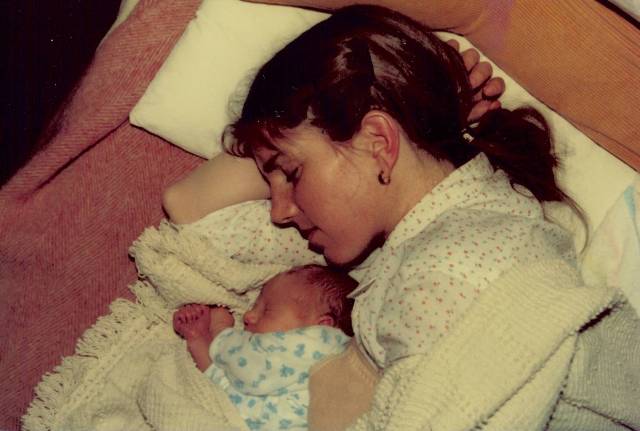
baby Anna and mother Janet, early April 1981

1. Five days after my mother turned thirty-one, she gave birth to me. So I feel like, on some level, this is the point at which my own life narrative and my mother’s life narrative diverge. Which is super-overly-simplistic, really, given that before she was thirty-one my mother did lots of other things I also haven’t done (e.g. date people, get married, get divorced, go to college for architecture, work as a waitress, and go snorkeling in the Cayman Islands). But — all judgyness about parenting/not parenting aside ’cause we don’t really do that in my family — there’s no way to get around the fact that spending your thirties as the full-time parent of three children under the age of ten is going to make for a significantly different kind of decade than the one I have stretching out before me.

Which feels a little weird. Like an opportunity, but weird. One of those moments, as a kid, when you realize your parents — however great they’ve been as models — can only model so far, and so much, before you’re on your own, inventing a life.

2. Not-library things I want to do in my thirties. So I’ve got the next decade before me, an open book. And Hanna and I are settling into life together. Which is really something rich and strange and rather unexpected (I had this notion in my head, for a long time, that I’d probably end up a spinster — in the nicest possible way! I was kinda looking forward to it. But, you know, then Hanna came along and how could I not?). So I have the luxury of thinking about what I’d like to do with myself, other than my professional and partnership activities. Here’s what I’ve come up with:

  • Travel to England, Scotland, Wales, Ireland. I mean, duh. Travel is definitely near the top of my list of things to do with discretionary income (after “buy books” and “eat good food”). 
  • Write and publish erotica. Turns out, at least in the estimation of a few friends (of a range of sexual persuasions) that I have a talent for the stuff. Who knew! But I enjoy writing it and they enjoy reading it, so it seems like it might be fun to try my hand quasi-professionally there. 
  • Find ways to be with young people and age-diverse families. So I’m not going to have children of my own, it looks like. And I’m 95% cool with that. But I’d like to use part of my time this next decade thinking about how my household of two-adults-plus-cat can be hooked into wider networks of caring that encompass families with more age diversity. None of our intimate friends or family have chosen to incorporate children into their lives yet; I’m kinda hoping a few of them do so that we have the opportunity to be kick-ass aunties.
  • Choose and/or create a home. Okay, well, yes. We obviously already have a home together, Hanna and Geraldine and I. But it’s an apartment that started out as a student space, a temporary space, and something not actually selected by both of us, as a couple. It would be nice if, in the next decade, we actually found a home-space through more deliberate selection according to our needs and desires as a family.
  • Research and writing. I have yet to publish that first scholarly monograph. Now with a thesis under my belt, I feel I can move on to other projects — so hello life-long learning! I’m really looking forward to nosing around and finding my niche as a thinker and writer. Not having this be my day job is, in some ways, even more of a blessing since it means I have free reign to explore ideas as I see fit. That was one of my goals of library school: to situate myself as an intellectual in spaces that honored intellectual endeavors, without being required to “publish or perish.” And since I’ve arrived, I’d like to make the most of it.
Happy birthday to me, and welcome to this most fine of decades. Go forth and be joyful.

"how women’s studies mattered in my life": a panel discussion

15 Thursday Mar 2012

Posted by Anna Clutterbuck-Cook in think pieces

≈ Leave a comment

Tags

family, gender and sexuality, hope college, michigan, politics, professional gigs, work-life balance

On 6 March I participated in a panel presentation/discussion at my alma mater Hope College in celebration of twenty-plus years of women’s studies at the institution (the interdisciplinary minor was formally established in 1992; students had been forming “contract” majors and minors since the early 1980s).

I’m really hoping the college will make the panel discussion available via web video so I can share it with all of you, since the other panelists all had fascinating stories about their coming to feminism and its integration into their personal and professional lives. The questions from the audience were engaged and the panelists answers were diverse and thoughtful. I was honored to be a part of the evening.

At the beginning of the session, each panelist was asked to speak for about ten minutes on the topic “how women’s studies mattered in my life.” Here’s what I had to say.

Tonight, I’d like to share some thoughts about three aspects of my life as a feminist, and how feminism and women’s studies have affected my life. The first is how feminist ideas and politics have brought to my personal relationships, the second is how I incorporate feminist thought and practice in my intellectual and professional life, and third, some thoughts about how I’ve grown as a feminist since graduation.

I’m sure most of the people in this room have a story to tell about their coming to feminist ideas and a sense of how those ideas could help them make sense of their own lives and the world around them. In my family growing up, feminist understandings of gender equality and individual self-determination were more or less taken for granted, and I felt an affinity with feminist activists in history for as long as I can remember. My sense of contemporary, feminist political awareness — the realization that there is still feminist work to be done — came gradually as I struggled during my childhood and adolescence against prejudiced notions of what children and young people are capable of. As I grew from being understood primarily as a child to being understood as a young woman, rigid conceptions of sex, sexuality, and gender came to the fore — particularly in peer relationships and in church. I had support in my immediate family to push back against restrictive notions of gender and sexuality — but it was feminism as a philosophical framework and as a community of practice that gave me the support outside my family to articulate and honor my own experiences and desires.

Since my teens, feminism (conceptually) and feminist spaces (materially) have been a space for me to break open ‘common sense’ definitions of love, relationships, human sexuality, and community. Feminism has connected me to global, trans-historical network of people who work not to pass judgment on relationship diversity. We’re all imperfect at this, it’s true, but at least within feminist spaces there is usually a common ground to talk about how monogamy and non-monogamy, parenting and not-parenting, queer and straight relationships, long-term and more casual sexual relationships, can all be ethical, meaningful, and healthy.

Feminist spaces encouraged me to ask “does it have to be this way?” over and over and over again. Even when I didn’t think I had the right to identify as queer (more on that in a minute),  my ties to feminist and queer thinkers and activists became a way for me to explore the possibility of sexual intimacy and family formation in ways that didn’t make me feel claustrophobic or filled with rage. That instead filled me with hope and desire, with expansive generosity, with the sense that there was enough creativity in the world to ensure that everyone’s relational needs could be met — and exceeded.

Feminism encourages me to take ownership of my sexuality and learn how to take pleasure in my body in a culture that is hostile to our embodiment. Being a self-identified feminist is obviously not an instant cure for body insecurity, for fear of being the wrong size, the wrong shape, the wrong kind of beautiful. But in my experience, a feminist analysis of our culture’s narrow expectations of beauty, sexuality, and health give me an edge in asserting my right to be at home in my physical self. My knowledge and confidence about my body, and the pleasure I can experience as an embodied person, has been hard-won in a lot of ways. And wouldn’t have been as possible, or as rich a journey, without feminism in my life.

My feminism, at Hope College, wove back and forth across the boundaries of personal and academic life. On the one hand, feminist analysis was a way for me to understand the political upheaval around religion and sexuality I experienced here at Hope (in the late 90s). I was politically queer long before I was sexually active, in a same-sex relationship, or had to grapple with how to label myself in a world that demands sexual identification. By the time I entered into my first relationship — with a lover who happened to be a woman — I had a rich history of engagement with feminist and queer literature, political activism, and support networks to draw upon. That history made transition from thinking of myself as “mostly straight” to thinking of myself as someone who was in a lesbian relationship remarkably easy. And I owe the Women’s Studies program at Hope for at least some of that.

In an academic and professional sense, the exploration of gender and sexuality in historical context is at the heart of what I do as an historian. The Women’s Studies program here at Hope was my entre into thinking about women’s human rights as they are connected to broader socio-political struggles against racism, homophobia, economic inequality. Academic feminism is often criticized for being abstract, privileged, and out of touch with the urgent political engagement needed in “real” peoples lives. And I think that’s a critique worth listening to (if you haven’t already, check out the anthology Feminism For Real edited by Jessica Yee). But in my life, college classrooms became one of the places where I wrestled with notions of privilege and with the complicated histories of oppression. And in part because of that, my scholarship will never be entirely divorced from my political or personal selves.

It was through the Women’s Studies program that I became involved in my first full-scale oral history research project, published and presented original research, and began my research on the history of mid-twentieth-century countercultures — an interest I carried with me into graduate school an pursued for my Master’s thesis. While my work as a reference librarian isn’t explicitly related to feminism, gender and sexuality, or social justice issues, I went into library science because I see facilitating equitable access to information as a feminist activity. I get asked a lot whether my “dream job” would be to work at a library with collections more in my field of interest — but I actually prefer (perhaps because of my experience as a liberal growing up in West Michigan?) to work in spaces where feminist-oriented research remains, to some extent, counter-cultural, an exercise in reading against the grain of our collection strengths and thinking about how to come at things slant-wise. To find evidence of gender and the erotic in unexpected places. My years at Hope College taught me that radical ideas and non-normative experiences can be found virtually everywhere.

Political activism in the classic sense isn’t my day job — and that’s okay with me. Post college, the space for feminist thought, discussion, and networking that’s worked best for me has been the virtual world of Internet. Blogging provides me a way to interact with others over issues of gender, sexuality, and social justice in a way that help me avoid burn-out. If I’m having a shitty week, or I’m busy at work, or I can feel myself getting wound up over a really emotionally-fraught issue, I can walk away and engage in self-care — calm down, re-group, and re-engage. On my own blog, I write as much as I want about the issues I’m passionate about, and no one can dismiss me in conversation or bully me into silence by saying “oh, don’t take it so seriously!” or “you think too much.” I’m sure there are people out there who believe I do take things “too seriously” or think “too much.” But I don’t have to allow them to comment on my blog, and regardless of how loud they shout online, they don’t control my online space — I do.

Blogging has also put me in the way of opportunities to participate in feminist scholarship and activism — I’ve done author interviews, attended conferences, been a research participant for a number of studies on human sexuality — one on religion and use of sexually-explicit materials among women,  one on the personal experiences of queer individuals interacting with straight folks and mainstream culture. In 2009 I had the awesome experience of participating in the revision of the relationships chapter of the latest edition of Our Bodies, Ourselves.

Women’s Studies and feminism was a generally positive, inclusive space for me while I was at Hope. Since graduating, I’ve met a lot of folks for whom feminism and Women’s or Gender Studies programs were not welcoming. People who experienced feminist spaces as exclusionary because of their gender identity, their sexuality, their family lives, their concerns about race or class inequalities, their physical or mental health concerns … I’m sure some of you could add to this litany. My partner was told she couldn’t be a feminist because she liked the Terminator movies, and that she was a bad lesbian ‘cause her best friend was a guy.  I believe those people were wrong, but that doesn’t erase the fact that the language of feminism was used, in those instances, as the language of exclusion.

This doesn’t mean I’ve stopped identifying myself as a feminist. In fact, it’s made me more vocal about what I believe feminism is and can be. It’s made me more likely to speak up when I hear people using feminism as a tool to create and enforce us/them, insider/outsider hierarchies. At the same time, over the last ten years, I’ve had to come to terms with the fact that feminism, for some people, will never signify intellectual and emotional support for their being in the world the way it does for me. And that that’s okay. I believe feminism is — at its best — for everybody. But I also believe there are many pathways to a more loving, equitable world. As long as I see folks living out the values I name as “feminist” then I’m happy to count them as allies and co-conspirators.

Cross-posted at The Pursuit of Harpyness.
observations IV

12 Monday Mar 2012

Posted by Anna Clutterbuck-Cook in a sense of place

≈ Leave a comment

Tags

domesticity, family, moral panic, smut, travel, vermont, work-life balance

1) We’re home on the couch with the cat curled up between us. Geraldine was two parts grateful we were back and one part super-pissed we left. My left index finger is bandaged, making typing difficult. On th agenda: trim cat’s claws.

2) New York state goes on forever. The sixteen-hour drive we did yesterday (5am to 9pm) took us from Holland (Mich.) to Brattleboro (Vt.) via I-90. Thank the star whale for audio books and National Public Radio.

2a) One thing I really miss about regular driving is NPR-time. Between couple-time and work in a library I simply don’t listen to the radio as much as I used to, and it’s a delight to have the luxury once in a while.

3) On my observations III post in which I wrote about how comparatively simple the logistics of life back in Holland feel, FluffyCat observed that “anywhere I travel seems less hectic than my regular life does.” Fluffy’s right, of course … there are the responsibilities in daily life I no longer have when I visit my parents. At the same time, I did live in Holland as an adult with a job, a household, other responsibilities. And it still seemed less endless than life here in Boston does. Hanna suspects it’s something to do with the plethora of options (which way/how to travel home from work, where to do the shopping, etc.). Sometimes just deciding can feel overwhelming.

3a) When we drove into Brattleboro (Vt.) yesterday, along Route 9, I thought — as I always do — how much that part of the country reminds me of Southern Oregon and my time at the O.E. I like to imagine part of my instinctive connection with Hanna comes from the fact she went to a college (Marlboro) that sounds so like the Oregon Extension, and is located in a similar geographical setting. I thought how lovely it would be if driving along route nine was arriving home. I like so much of our lives in Boston (our apartment, our work, the walkable city), but nearly five years in part of my soul remains irreconcilable to urban life. Hanna and I remain unsure what to do about that — but any big changes for the future.

4) Having read Hanna Rosin’s opinion piece and this Guardian article about E.L. James’s fan-fiction novel turned published erotica, Fifty Shades of Grey, I feel like I should write something about the reaction to the reaction of this book … if you get what I mean. But I’m kinda overwhelmed by the way the coverage betrays peoples’ preconceptions about fan-created fiction (written poorly, written well), about BDSM (written poorly, written well), about erotica generally, and about women who read erotica specifically that … well. I feel rather tongue-tied. Three things I do know:

a) Rosin’s discussion of the dom/sub relationship suggests she didn’t bother to do any kind of background research in BDSM culture before reviewing a porn novel with BDSM themes … which seems like irresponsible reporting;

b) the origins of this novel in fan-fiction intrigue me; and

c) I’m really really irritated by the implicit suggestion in both pieces that women reading erotica = women unhappy with their actual sex lives, and/or is some new “trend” … hello? When are we going to get over the fact that women are sexual beings who enjoy sexually-explicit material throughout their lives?

5) There are over 100 emails in my Outlook inbox (work email); I am steadfastly ignoring them until 8:45am tomorrow morning, but am really hoping the majority of them are staff circulars that will have become irrelevant or scan-able by the time I’m back on the job. Tomorrow will be a catch-up day for sure. Ah, adult responsibility: I did long for thee.

6) Hanna said to me last night as we were falling asleep at the Super 8, “I think next year we should plan to stay for two weeks, so that we have more time to relax and to see the people we care about.” Which seems like a pretty strong vote for the in-laws to me! I’m so lucky to have a partner who gets along with my family, and likes the place where I grew up (while sharing my dislike for the area’s conservative politics).

6a) Having previously exchanged an engagement cookie (fig) and engagement mustard (cheddar ale), we found ourselves discussing the possibility of engagement tattoos while driving along Route 2 this afternoon. Something symbolic that could then be worked into slightly larger wedding tattoos when we finally get around to eloping (my mother says we should head for Ireland). If anyone out there has working knowledge of Gallifreyan and would be willing to help us work up designs using our initials let me know!

to me, being "progressive" actually means supporting family diversity and resource equity — not just putting the kids in public school

17 Friday Feb 2012

Posted by Anna Clutterbuck-Cook in think pieces

≈ 2 Comments

Tags

being the change, children, education, politics, random ranting, work-life balance

So Dana Goldstein has a piece over at Slate.com about how “progressive homeschooling” is an oxymoron because parents who remove their children from the public school system are thumbing their noses at civic responsibility. She argues that: 

[Liberal homeschooling and unschooling] is rooted in distrust of the public sphere, in class privilege, and in the dated presumption that children hail from two-parent families, in which at least one parent can afford (and wants) to take significant time away from paid work in order to manage a process—education—that most parents entrust to the community at-large.

The idea that education outside of school is the sole province of crazed Christian fundies and upper-middle-class elites would certainly surprise my partner, whose family lived below the poverty line for much of her childhood and yet still chose to home-educate her until ninth grade. It would likely also surprise the family of my best friend growing up, whose mother was a divorced parent who worked part-time and yet still homeschooled her two daughters throughout their childhood. The notion that homeschooling requires “at least one parent … to take significant time away from paid work” to function would surprise another friend of mine whose parents both worked from home and thus shared the parenting and income-earning responsibilities equally when their children were young.

I realize that anecdotes do little to refute data, and it is certainly irrefutable that financial and cultural resources (i.e. social privilege) confer choices.  The ability to sit down as a family and co-create a home life that runs counter to the dominant culture is, no doubt about it, much, much easier when (and therefore, more prevalent in families where) you’re not juggling multiple minimum-wage jobs, worried about losing your mortgage, or wondering whether you can afford to get that needed root canal. This ability to not only name our desires but also (at least to a point) act upon them is a function of class privilege, and in evidence among families where children attend public school as it is among families who make other arrangements.

Sure, there are homeschooling families who are privileged assholes (I’ve met some of them), but privileged assholery is not a symptom of home-education. It’s a symptom of, well, being a privileged asshole.

See, I think Goldstein’s argument about how education that takes place outside of school (whether we call it “homeschooling,” “unschooling,” or something else entirely) is crap progressivism turns family diversity into a proxy for talking about class. Because class is really hard to talk about in American culture. We don’t want to talk about the unequal distribution of economic resources, and how we’ve lost the war on poverty (or just surrendered to it). We cling to the notion that education (via public schools, or charter schools, or elite prep schools, whatever) is the pathway out of that inequality when, in fact, better distribution of economic resources is the pathway out of that problem.

Maybe schools should be better. I’m not, as a person who grew up outside of school, opposed to that. My siblings both made use of the public high school in our town. A lot of families I know who have engaged, or currently are engaging, in some type of home-based education avail themselves of the public school resources they pay taxes to support. Home-educated kids often go to colleges, some of which are state-supported. Goldstein sets up a world in which there are two oppositional communities: families who use public schools, and families who home-educate. This simply isn’t what the world looks like. While I don’t necessarily fault her for this outsider’s assumption — much of the literature in the lefty home-education movement does see institutional schooling as fundamentally flawed and/or inhumane — that narrative ignores the reality that these two populations are flexible, fluid, and inter-twined to a high degree.

Since homeschooling families stopped living in fear of prosecution if they were discovered by local authorities, many kids move back and forth between out-of-school learning and institutional learning. Whether it’s participating in extracurricular activities, attending one or two classes a term, going to school for a year or two to try out that way of life, or some other creative option, civic involvement in the form of using public school resources is often a daily reality for home- and un-schooling families these days. There are public school teachers home-educating their kids, and former unschoolers teaching in public schools. Goldstein’s all-or-nothing argument values rhetoric over reality.

That’s the “we’re more normal than you think” point. Now I want to make the “why are you scapegoating our non-normative lives?” one. Goldstein’s argument is that all “good” or truly progressive families should support the public school system by sending the school-age members of the family to school. Because:

Government is the only institution with the power and scale to intervene in the massive undertaking of better educating American children, 90 percent of whom currently attend public schools. (And it’s worth remembering that schools provide not just education, but basic child care while parents are at work.) Lefty homeschoolers might be preaching sound social values to their children, but they aren’t practicing them. If progressives want to improve schools, we shouldn’t empty them out. We ought to flood them with our kids, and then debate vociferously what they ought to be doing.

I agree with Goldstein that high-quality socialized childcare and education should be available to families that want them. And I imagine that a majority of families would take advantage of those resources, if the continued feminist-led campaign for affordable high-quality daycare is any indication. The life choices of middle- and upper-middle-class families who have viable options suggest that few families these days would opt for full-time parenting and out-of-school learning for their youngest members. So I don’t think full-scale flight from institutional schooling is any realistic vision of America’s future. As much as it might personally pain me to say it, unschooling will never be a majority family-life choice.

But neither will polyamory, or open marriage. And data suggest that even acknowledging human sexual variety (and right-wing fears to the contrary) the majority of households in our country will never be headed by couples, threesomes, or moresomes of the same sex and gender identity. Dykes To Watch Out For is (again disappointingly!) the wet dream of our future utopia only in my little corner of the universe.

Yet I doubt Goldstein would argue that supporting the ability of people to form consenting, mutually-supporting relationship agreements of whatever kind works best for the folks in question is not a “progressive” (dare I say liberal? leftist? radical?) value. If families work best when they are organized to meet the needs of their constituent members, then it seems common-sensical that there would be no one-size-fits-all solution to dependent care-giving, to wage-earning, to physical home arrangement, to negotiations over who does what, when, where, and with whom.

In fact, it seems fundamentally non-progressive to argue for a one-size-fits-all model for parenting and education — which is what Goldstein is essentially doing when she argues that good liberals should all use public schools. How is that different from the conservative argument, all evidence to the contrary, that children thrive best in a two-parent household in which one parent is a man and the other is a woman? How is that different from the argument mothers are innately suited to care for dependents? How is that different from asserting that the heterosexual dyad is the only type of union that should be recognized by the sate?  It’s not. It simply replaces one restrictive notion of good parenting with another. Instead, we should be recognizing that “good” parenting, and meaningful education, will inevitably have as many embodied forms as there are human beings to embody them.

I’d argue that, rather than re-hashing the tired argument that non-school-based learning is inevitably the preserve of the elite, we should be asking ourselves how to more equitably share our resources so that all families will have the highest degree of agency to decide how to put together the activities of parenting, employment, and learning. Bickering about which site for learning is optimal for most obscures the reality that no single site of learning will ever be optimal for all. It also perpetuates the myth that public school education can fix the problems of inequality — when, in fact, only fixing the problems of inequality will fix the problem of inequality.

Don’t make children and parents whose lives are atypical scapegoats for a society that has failed, en masse. to deal with its issues of class privilege.

30 @ 30: on vacation [#11]

19 Wednesday Oct 2011

Posted by Anna Clutterbuck-Cook in life writing

≈ Leave a comment

Tags

thirty at thirty, travel, work-life balance

So last week Hanna and I took a few days vacation around the long Columbus Day weekend. Back when I asked for the time off from work — I think sometime in mid-June — I had the vague idea we might have the energy and disposable income to spend a few days in Vermont, just the two of us. We like Vermont. But hotels are expensive, and car rentals are expensive, and someone has to look after the cat, and even if none of that had been an obstacle what it turned out we both kinda sorta really wanted to do with our five days of not working was stay at home and do nothing.

Breakfast at Crema Cafe (Harvard Square, Cambride, Mass.), July 2011,
photo by Anna.

Well, not nothing. We spent a lot of time being cosmopolitan and sitting in coffee shops reading and drinking espresso and cafe au lait and eating brioche.

We were brave and tried walking somewhere new — out to Mount Auburn Cemetery in Cambridge — which is the first landscaped cemetery in America, consecrated 1831, and had fun taking pictures of headstones.

Anna checks the map in Mt. Auburn Cemetery, October 2011,
photo by Hanna.

We read about Charles Darwin and Hillbilly Patriots and biopolitics.

We applied (and were accepted!) to become reviewers for Library Journal.

We wrote fan fiction about Dean Winchester and Castiel and about Sybil Crawley and Gwen.

We had a friend over to watch (a disappointing installment of) Inspector Lewis and baked a pumpkin pie.

Apple pie and beer, October 2011,
photo by Anna

We stayed up until midnight and slept in until quarter of nine in the morning.

We took afternoon naps on the living room couch.

When I returned to work on Thursday my colleagues asked how the vacation was and did we go to Maine. “Actually,” I confessed, “We stayed at home and made no plans and that was exactly what we needed.” My co-workers were totally on board with this idea.

What struck me last week as I was thinking about our approach to this latest vacation is how it is the complete opposite of how I understood vacations as a child. When I was young, the above activities (except for naps, since I was not a nap-taker) would basically have described my everyday life. Stay up late reading, wake up to muffins or pancakes around ten, do more reading, maybe go for a walk or a bike ride, ram around outside with siblings or friends for a few hours, go back to reading, maybe some food at some point, a trip to the library.

Pippi Longstocking and Mister Nielsen
via

There’s a great story in one of the Pippi Longstocking collections in which Pippi (in my child’s mind possibly the ur-homeschooler) becomes jealous of her friends Tommy and Annika because they get summer holidays and Christmas vacation at school. She figures if she attends school then she, too, will get the holidays that her friends seem to enjoy. Obviously her attempt to become a “normal” child is short-lived and the moral of the story is that she’s really better off living her own kind of life and doing what she wants to do rather than trying to be someone she’s not. As a kid, I thought this story was hilarious because it was obvious (to me) that not going to school meant that you could have “vacation” (that is, school-free days) all the time.

Storm clouds over the horizon (Bend, Oregon), March 2007
Photo by Anna

As a child, vacation-vacation meant travel. We went on vacation every spring to a tiny cinder block cottage on the shore of Lake Michigan, where we got to sleep in bunkbeds (!), toast marshmallows over the bonfire (!!), spend all day wet and sandy on the beach, and poke at antlion sand traps with twigs.

As a child, vacation-vacation meant flying to Bend, Oregon, for a month to stay with my grandparents and explore the high desert. It meant taking the overnight train from Bend to San Francisco to visit our aunt and ride the trolley cars. It meant my first solo trip by airplane to spend a month of summer with a friend of mine who grew up on Vancouver Island, British Columbia.

As a child, vacation meant, in the immortal words of Toad, “The open road, the dusty highway, the heath, the common, the hedgerows, the rolling downs! Camps, villages, towns, cities! Here to-day, up and off to somewhere else to-morrow! Travel, change, interest, excitement!”

Vacation sometimes still means travel, now that I’m an adult, but of course travel now requires effort in a way that it didn’t when I was small. As a child, I remember being responsible for, you know, creating a travel journal and some sort of packing list. Preparation for trips meant reading novels set in the locations where we’d be traveling, and saving up spending money for souvenirs. I didn’t have to worry about such pesky details as driving routes, airplane tickets, hotel reservations, and train schedules.

Drover’s Inn, West Highlands, Scotland, May 2004
Photo by Mark Cook

Not that trip planning can’t be fun — sometimes planning travel (as Alain de Botton once observed) is more than half the fun. I remember the thrill of being in my teens and developing enough independence that I could plan and execute solo vacations (perhaps the topic of another “thirty at thirty” post). But I find, as an adult, that travel is no longer synonymous with vacation the way it once was. Instead, the two have developed along often-overlapping yet distinct pathways in the geography of my (our) life.

Travel usually must take place during vacation, but is not the whole of it.

I think in my thirties I would like to develop more fully the art of non-travel vacation time. I don’t want to be one of those people who needs to go off to the White Mountains with no laptop or cell phone in order to stop checking my work email. And I don’t want to fight the persistent, nagging feeling that I had during graduate school that time spent not working should translate into time spent doing other “productive” activities, the sort of activities that “count” in whatever complex internal matrices of value I have constructed for myself.

I think my parents, what with the home education and through continuous personal example, have given me some good tools for this. The experience of home education really blew open the myth that unstructured time isn’t worthwhile, and similarly gave me the distance from mainstream expectations needed to respond to all assertions of value or non-value with an interrogative “why?” So doing nothing in lazy? Why? So in order to be a valuable citizen you need to be “productive”? Why? What is productive? Who says? Why should I believe them? Convince me.

Take your time off from the “have tos” of daily adult life seriously, people. I know some of us have more luxury to do this than others — believe me, I never realized how amazing paid vacation  can be until I started earning it — but I hope that everyone in our productivity-obsessed culture can learn to appreciate the art of down time a little bit more. In ourselves, and in others.

on vacation [back next week]

09 Sunday Oct 2011

Posted by Anna Clutterbuck-Cook in our family

≈ Leave a comment

Tags

blogging, domesticity, hanna, work-life balance

Hanna and I are taking some time off this week to enjoy autumn and make space for a stay-at-home vacation for just the two of us. So I won’t be posting my regular round of posts this week, but never fear! I’ll be back on the 17th and up to my usual shenanigans.


Middlesex Fells Reservation (October 2007)

 I’ll be back with news of this year’s NaNoWriMo, book reviews, more installments of thirty at thirty and silly cat pictures per the usual. Until then, hope you all have a lovely Columbus Day weekend and week ahead.

30 @ 30: work and vocation [#9]

21 Wednesday Sep 2011

Posted by Anna Clutterbuck-Cook in life writing

≈ Leave a comment

Tags

blogging, librarians, MHS, thirty at thirty, work-life balance

If I had wanted to be a librarian all my life, I suppose this could have been a much shorter blog post (and maybe I’d have been able to finish it for last Wednesday)! But actually, the decision to become a professional librarian came relatively late in my exploration of possible vocations. Looking back, that fact seems sort of inexplicable. After all, I grew up living a scant 1.5 blocks from the local public library and applied for my first library card the moment I could sign print my name. I even volunteered there as a child, honing my alphabetization skills by re-shelving the chapter books in the middle-grade fiction section one afternoon a week. It was a great way to discover new authors.

via

Still, “librarian” didn’t make the cut as consistently as a number of other options on the what-do-you-want-to-be-when-you-grow-up? list. As I was just relating to a friend recently, when I was a wee child under the age of ten my most ardent desire was to become an actress in musical theater — my very first vinyl record was the Broadway cast recording of Annie Get Your Gun and you bet your bottom dollar I knew every word.

I also considered “lighthouse keeper” after seeing Pete’s Dragon at an impressionable age.

As I’ve written about previously, I always felt comfortable caring for young people and for a long time assumed that parenting and perhaps some sort of professional social work occupation were in my future. When I hit puberty and became fascinated with pregnancy and childbirth, I considered midwifery (and later doula training) as a possible option. I still think about this — the doula/midwifery thing — as a possible second career, though right now our family can’t really handle my taking on one more new thing.

Perhaps the most abiding vocational dream I had growing up was a vision of becoming a writer of fiction. I figured I might combine this with being a bookshop owner — preferably a picturesque bookshop by the seaside, complete with the bookshop cat(s) or dog(s), and a small apartment above the shop in which to live.

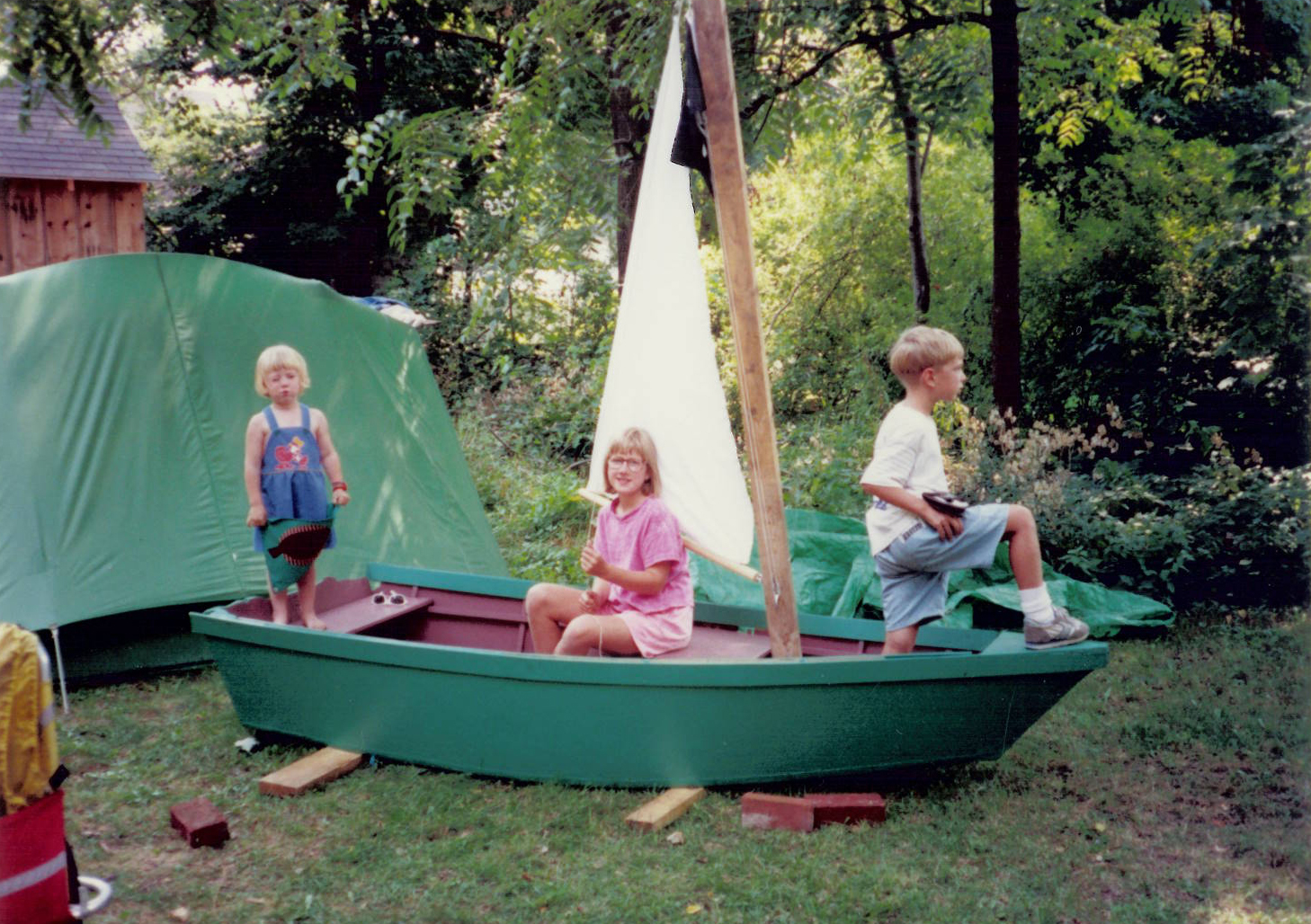
me (circa 1993)

After I started volunteering at the local history museum as an adolescent, the bookseller/author dream was joined by the possibility of becoming a museum curator, or perhaps working at a living history site somewhere (the romance of this only increased by Nancy Bond’s novel Another Shore in which the protagonist is sucked back in time through working at a living history village). This was how I ended up taking History classes in addition to English and Women’s Studies classes in college — and ultimately discovering my love of research and scholarly writing — and how I ended up being encouraged to consider graduate school as an option.

For someone who’d waffled about even attending undergraduate classes, graduate school was an idea that I was both flattered by (I had an incredible group of faculty mentors) and resistant to.

Which is actually how I ended up in library school. Mostly because I really didn’t want to apply for PhD programs. I knew I didn’t want to teach and by the time I graduated from college in 2005 I was fairly sure I didn’t want to get into the business of independent book selling — I just don’t have the business head for it. A year and a half in corporate book selling at Barnes & Noble was enough to tell me I’d go mad in that environment. I was good at the customer service side of things, but hated the corporate pressure to compete internally over sales and memberships and all that crap. Just — no. I couldn’t be bothered. Which would have meant not moving beyond part-time sales clerk, no matter how well I knew the stock.

Librarianship (alongside continuing my studies in history) seemed like a good way to compromise on all of these competing interests without closing any doors for good on my research or feminist interests. And if my present-day occupation(s) — including this blog — are anything to go by, I’d say the gamble has by-and-large paid off when it comes to quality of life and work-life balance. I have a job that I find intellectually stimulating and socially responsible. I realize that one (a satisfying, respectably-compensated job) doesn’t automatically follow from the other (an MLS degree), but putting one foot in front of the other in that general direction brought me to Boston and eventually brought me here.

But what does it mean, to me specifically, to be at this point where I have a professional job? What do my career choices (at this point in my life) say about how I think about the labor we perform? And what we are called to contribute to the world? I don’t have any pat answers to those big meta questions. But I do have a few observations.

I grew up in a home where what people did as paid employment didn’t define them. My mother worked in preschool education and went to college for English and Architecture before leaving the workforce to pursue full-time parenting. My father took his (still current) position as a bookstore manager before completing his BA and has remained in that job throughout his career. While he actively pursues professional development and has re-invented the role of the bookstore (and bookstore manager) several times over, it has never been who he is any more than being a full-time parent has been who my mother is. I could also introduce them, variously, as “cyclist,” “cartographer,” “calligrapher,” “fiber artist,” “writer,” etc. While we children were encouraged to follow our passions and do what we love, we were also not required to turn those loves into money-making work.

I believe in professional standards and ethics, but resist the hierarchy of professionalization. I’ve written about the issue of professionalization and one-ups-manship before on this blog (see here and here) and in a slightly different context over at Harpyness (see here). What it boils down to is that I value people’s knowledge and skill set, not their credentials — and I don’t trust the credentialing system to always give me accurate information about an individual’s abilities. I imagine this comes from being homeschooled. And to be frank, it also comes from having been through graduate school and seeing first-hand the work my fellow students were doing. Schooling doesn’t always equal expertise.

“Work” is not always synonymous with “vocation.” My job is to be a reference librarian. While I see that job as part of my vocation, it does not encompass it. I’m not precisely certain, at this juncture of my life, what my vocation is … but I believe I could pursue it in a number of different guises, librarian and blogger being only two of a myriad options.What’s my vocation? I was lying awake at 4am this morning trying to think about what aspects of my work I think of myself as being called to do in some sort of “I must do this or fail to thrive” sense. Writing and thinking about ideas certainly falls into that category. Cultivating and nurturing intimate relationships (sexual and non-sexual). Being conscious about the way my life choices effect others is another part of my answer to the question “how to live?” But none of this requires a particular type of job in order to pursue.

“Work” is also not separate from “life,” any more than “school” and “life” are mutually exclusive. Growing up outside of school, I find, has had an enduring effect on how I consider the dividing line between what I understand to be “work” and everything else. I don’t think that “work” and “play” have to be (or ideally should be) mutually exclusive categories. Nor do I think that “life” is something we should picture as being put on hold when we go to work. I realize that for the majority of paid employees, that is the reality — they aren’t allowed to be themselves in the workplace. But even when we work in shitty workplaces, that too is part of our lives rather than being something that puts our lives on hold.

While I do hold certain expectations that personal drama be kept from bleeding over into our workplace lives, I also don’t believe there are hard and fast rules about this. Sometimes shit happens, and sometimes it happens while we’re at work. While there are aspects of my non-work life I don’t feel interested in sharing with my colleagues (or really anyone outside my intimate circle), I also appreciate a workplace that recognizes I am a human being with a full life and interests that may fall outside of the scope of my job description.

At the same time, I don’t want work to be my life. I don’t want to be defined by my profession, and I don’t want my life to be dictated by it either. I’m lucky enough to have a boss that chastises me for checking my email at home (even if she does it herself), and who insists that I work my 35 hours/week and only that with rare exceptions (which are always acknowledged as exceptions). I appreciate that I can walk away from work at the end of the day and it doesn’t follow me home. I’m also grateful that there are times when my work is so interesting that I kinda wish I could take it home. But for the most part, I don’t. Because I want to make sure I leave room for my other (my vocational?) priorities.

So where am I headed from here? My bare minimum expectation for “success” as a worker is to have a job where I’m respected as a human being and as a laborer, a job that’s intellectually stimulating, fairly autonomously-directed (i.e. I have freedom to do my work independently), and a job that pays for good quality of life. I have that right now, which is a position of social privilege in these economic times. There are junctures when I wish we were a little more financially stable, or when I wish we had more discretionary income with which to travel or give gifts (see the upcoming installment “money”), but for now I am content.

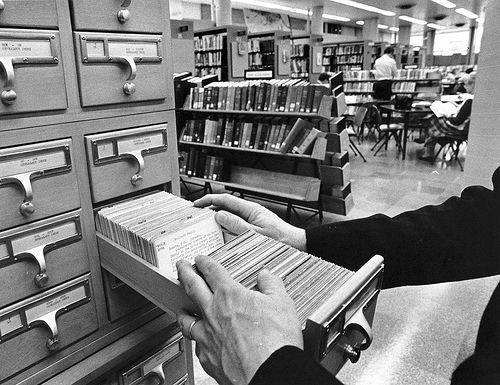
Did I imagine this sort of work life when I was a child? Probably not (mostly because the internets were a thing of the future; I learned to use libraries when card catalogs were still, actually, card catalogs).

via

But I don’t think my child-self would be disappointed with where I’ve ended up thus far. Which I feel is about the highest form of praise I could ask for.

four years ago today: "I’ll have to re-think this being-your-friend thing"

12 Monday Sep 2011

Posted by Anna Clutterbuck-Cook in life writing

≈ 2 Comments

Tags

four years ago today, hanna, simmons, work-life balance

Hanna’s comment, when I asked her to look this conversation over and approve it for posting, was: “good god, you are a clunky flirt … just…wow … it’s amazing.” The only thing I can offer by way of defending myself is to point out that at that point I hadn’t yet consciously realized I was interested in flirting, or even at all capable of it! As before, third party names have been omitted and clarifying editions are in brackets. All other text is original to the conversation.


dorm room beds aren’t the best for cuddling
(September 2007)

Online Chat with Hanna Date: 2007/9/12
1:13 PM
me: the internship site [for choosing archives internships] is up and running!
Hanna: oh, thank goodness!
anything you can’t live without? 😉
1:14 PM
me: um . . . nothing quite THAT inticing
My top three choices so far are:
Hanna: drumroll
1:15 PM
me: 1) BPL [Boston Public Library], a photo project with the Leslie Jones collection, “part of a pre-digitization phase.”
Hanna: awww…the bpl….
me: 2) Mass. Dept of Conservation and Recreation, organizing and indexing plans and maps, including some Olmstead stuff [this was the one I was eventually offered, and accepted]
Hanna: nice,nice.
1:16 PM
me: and 3) the New England Conservatory of Music, a personal collection of one Victoria Glaser, now 94, whose collection they would like to make accessible for research
Hanna: oooh, nice. all good choices!
me: I also looked at the Boston Athenaeum, just because the space is so worthy of drooling over
1:17 PM
[me:] but the whole concept of a subscription library . . .
so hoity-toity
Hanna: yeah, S (who used to work here) went on and on and on about how much she loved the athenaeum and her internship there. she said they had the best pencils ever.
1:18 PM
me: haha
well, that $220/year membership fee has to pay for something!
the thing I wasn’t so sure about with their internship (aside from the elitism)
was that they weren’t so specific about what projects were available
1:19 PM
[me:] so you’re just picking the site, not the project
Hanna: right, right — warning there, though. when i signed up for my 438 internship the project i got at the site was totally different from the one they advertised.
i don’t know what would have happened if i’d raised a stink about it.
me: ah
good heads up
1:20 PM
[me:] so S liked the athenaeum?
(aside from the pencils?)
Hanna: oh, yeah, she loved it.
apparently it’s a gorgeous space and i guess some of their collections are to die for.
me: have you ever talked to anyone who’s worked at the BPL?
1:21 PM
Hanna: thinking
no, i don’t think so.
1:22 PM
[Hanna:] i know one of the girls in my management class this summer was just going to start working there when the class ended, but we didn’t stay in touch after the semester was over.
me: oh well
1:23 PM
Hanna: 😦 sorry.
me: 🙂
don’t worry about it
just thought, you know, if you had any insider info . . .
Hanna: 😉 only that they can’t hire anyone who doesn’t live in bosto.
n
1:24 PM
me: ah . . . well, that’s good to know for future reference!
Hanna: yup, pretty much!
did you see the collection at harvard that’s olmstead’s stuff?
1:25 PM
me: no . . . hmm
I kinda skipped over the Harvard entries, since V made it sound like those were really popular
Hanna: mmm, true. but if you don’t ask, you don’t get! 😉
1:26 PM
me: yeah, but I have this pathological aversion to taking choices away from other people 🙂
I always want to take the choice that no one else is interested in, so I don’t spoil anyone’s plans
1:27 PM
Hanna: well…yes, so, okay philosophically i have to say that is highly altruistic of you.
and therefore i cannot disapprove.
me: 😛
Hanna: or even argue really.
me: I’m not saying it’s a GOOD thing
Hanna: 🙂
me: I mean, for me personally
1:28 PM
Hanna: no, i know. and in this case it might be a bit of overkill, really. it is just an internship after all. it isn’t like you’re doing something really serious like taking the last m&m or something.
me: haha
(looking at the Harvard internships)


the Plans Library at the Dept. of Conservation and Recreation
(October 2007)

 1:29 PM
[me:] they have a lot of cool ones related to horticulture this semester, don’t they?
Hanna: yeah — the glass flowers collection one might be cool. have you seen that museum yet?
me: noooo . . .
must plan to go someday [I still haven’t been!]
1:30 PM
Hanna: on a sunday — if i remember right, mass residents get in free before noon — or after noon — or something like that. it’s on their website.
me: again, good to know!
now you have confused my choices 😉
1:31 PM
Hanna: whoops!
but i added something to your field trip list so that’s got to be a good thing.
me: yeah, I’ll have to re-think this being -your-friend thing
🙂
(field trip list–always a plus!)
1:32 PM
Hanna: see? there you go. the one balances out the other. 😉
1:33 PM
i’d also like to know how this internship out in northampton counts as being on mass transit.
are they confusing the t with greyhound?
me: good question
1:34 PM
[me:] some of the ones on the list looked a little sketchy, access-wise to me!
I mean, yeah, if you had 3 hours to commute!
Hanna: yeah! my 438 class had internships on offer that were up in southern nh and maine.
1:35 PM
me: okay, those may be great sites, but how many of us have the time and/or resources to go out there?
Hanna: exactly.
1:36 PM
[Hanna:] and they were very cool internships, but i don’t know if anyone took them in the end.
me: how sad 😦
1:37 PM
Hanna: i know we had a couple of distance commuter students, but i think they wanted to go to repositories in boston because of subject interests.
1:38 PM
me: so what are you thinking of?
1:39 PM
Hanna: there’s one at bc that just says ‘a chance to do higher level processing and finding aids’ and i just really want to get into the bc repository because they’re supposed to have a good irish collection… [she did, and they do]
…and then the one at harvard about making a kind of harvard cliff’s notes study guide because it might be fun to work at the harvard repository…
me: yep, yep
cliffs notes?
(which one is it?)
Hanna: hang on —
1:40 PM
“…[to] create a guide to biographical and genealogical resources about people associated with Harvard…”
and then the one at tufts in their digital collection because i nearly applied for a job there.
1:41 PM
me: the H one sounds like it could be rather OED [Oxford English Dictionary] in length!
well, all good options, yes?
1:42 PM
Hanna: yeah, i think so. and they’re all on mass transit in places i know and open m-to-f since i can only work on the fridays.
me: 🙂
yeah, that’s sort of how I sorted them as well
1:43 PM
Hanna: i hate the time crunch thing. i was working out my scheduling last night and nearly gave myself a panic attack.
me: yeah
if I end up working at NEU, my schedule is going to be pretty colorful this semester!
Hanna: 🙂
1:44 PM
me: plus, I’m still in the mode of catching up from all the transitions
so I feel like sleeping about 10hrs/night
I know it won’t last, but it makes me feel very . . . unproductive
1:45 PM
Hanna: i know how you feel.
it’s also because it’s turning chilly and dark earlier and so on…
me: yeah 🙂
that was my problem in Aberdeen
3pm?
getting dark?
time for bed!
in the summer
I never had to go to sleep 🙂
Hanna: 🙂
1:46 PM
[Hanna:] i just have an awful time getting up in the morning. it’s dark and chilly — this is what my feather comforter was designed for, people! why am i leaving it?
me: yeah, while I’ve never been a sleep-in-until-noon sort of person,
1:47 PM
[me:] I never have been able to happily get up before it’s light out
Hanna: oh, no.
1:48 PM
[Hanna:] when it’s light, i can get up — but getting up before the sun does not work for me.
me: exactly
which presents problems for those of us
living so far north of the equator
or wherever would mean
we wouldn’t ever have to get up
before it was light out 🙂

Sunrise across the Fens (September 2007)

1:49 PM
[me:] well, speaking of productivity . . .
Hanna: oh, overrated.
me: I think I’m going to sign off and go out for a walk before I face classes this afternoon
Hanna:  hehe — oh, okay, in that case, not overrated. i hear it’s gorgeous out!
1:50 PM
me: it is!
Hanna: oh, bah. well, go on then — you enjoy that beautiful weather! 😛
me: mm
I’ll try to send you some karmic sunshine, or whatever
1:51 PM
Hanna: hehe. thanks! and do enjoy the walk — boston’s really lovely in the fall.
me: bye
Hanna: wave

30 @ 30: school [#8]

07 Wednesday Sep 2011

Posted by Anna Clutterbuck-Cook in life writing

≈ 4 Comments

Tags

children, education, family, thirty at thirty, work-life balance

When it comes to school, I did things somewhat backward. In that, as a child, I didn’t go to school … and then, as a grown-up, I spent about twelve years (give or take) in institutions of higher education. As a student.

As regular readers of this blog know, my siblings and I were home educated from birth to college (in my case) and high school (in my siblings’ cases, part-time and full-time respectively). You can read more coherently about that experience, from my perspective in an interview I gave last December. I’ll try not to repeat myself here.

What I’m going to talk about in this post, specifically, is what “school” meant to me as a child, and then what it was like to be a student as a teenager and young adult — when I hadn’t grown up learning to conceive of myself in that way. And then what it was like to graduate from college, be a not-student briefly, and then return to student life as a graduate student (briefly: fucking hard).

So to begin: When I was a child, I thought not attending school was normal. Well, no. It’s not that simple. I understood — from the questions I got from grown-ups, from the stream of children walking to the neighborhood schools (Catholic and public), from the basic fact that children in books almost unerringly attended school — that school was something many children did. But when my mother asked me, once, when I was about five how many children I thought homeschooled I told her after a moment’s reflection that “about half” seemed a likely number.

This probably, in all fairness, reflected the statistics in our immediate circle of acquaintances. But obviously was not reliable data for the population more generally.

School, to me as a child, was something that other children did. And I honestly never thought about it much as an activity I could, should — or might want to  — engage in. It sounded boring, and required getting up early leaving all the projects I had going at home in order to do other projects. That seemed inconvenient at best, and threatening at worst. I remember being pissy about the crossing guards who were stationed at the street corners in my neighborhood before and after school, and for the children going home at lunch — I used to defy their instructions on principle because I wanted them to understand they couldn’t control me because I wasn’t one of “their” kids.

I was a pain like that, growing up.

I liked being the one in charge.

So school, until I was seventeen, was this thing I didn’t do. Couldn’t possibly fit into my busy schedule, which included stuff like volunteering at the local history museum and working part-time at a children’s bookstore, writing novels and traveling with family. At the time my schooled friends were taking the SATs and applying to colleges, I was seriously on the fence about even going to college at all. I was thinking about alternatives like full-time employment and apprenticeships. But thanks to my dad’s job I was able to enroll in a first-year writing course without matriculating, and since my career options at the time included “novelist” as well as “bookshop owner” and “museum curator,” I figured that was a good a place as any to try this school business and see if there was anything to it.

I fell instantly and utterly in love. With the class, with creative writing, with my professor, with the campus events we were required to attend as part of our coursework (film series, symposia, guest speakers), with being part of a larger conversation. I loved the routine of getting up on those autumn mornings, going for a run, getting ready for work, and then walking the six blocks to campus for my 8am class before turning up for my shift at the store. Yes, I struggled over assignments. Yes, I was terrified of failing at this school thing. Yes, I inevitably came across as weird and probably more than a little threatening to my fellow first-years who turned up in their pyjama pants, bleary-eyed from late night socializing or early-morning athletics training.

But that first year of college (I took first-year college writing in the fall of 1998; Christian feminism and creative nonfiction in the spring of 1999) was also utterly exhausting. The 1998-1999 school year was a politically charged year on campus, about which I’ve written before.  I found the semester schedule a roller coaster ride of intensity and deadlines and never-enough-time-for-a-job-well-done. I couldn’t imagine how students were able to complete the work for four or five courses at a time, when the hours it took for me to complete the reading and writing for one or two courses felt like a full-time job. I hated having work graded (and actually requested that faculty refrain from marking my work with a letter grade during those early years). I hated the apathy and/or competitiveness of my peers.

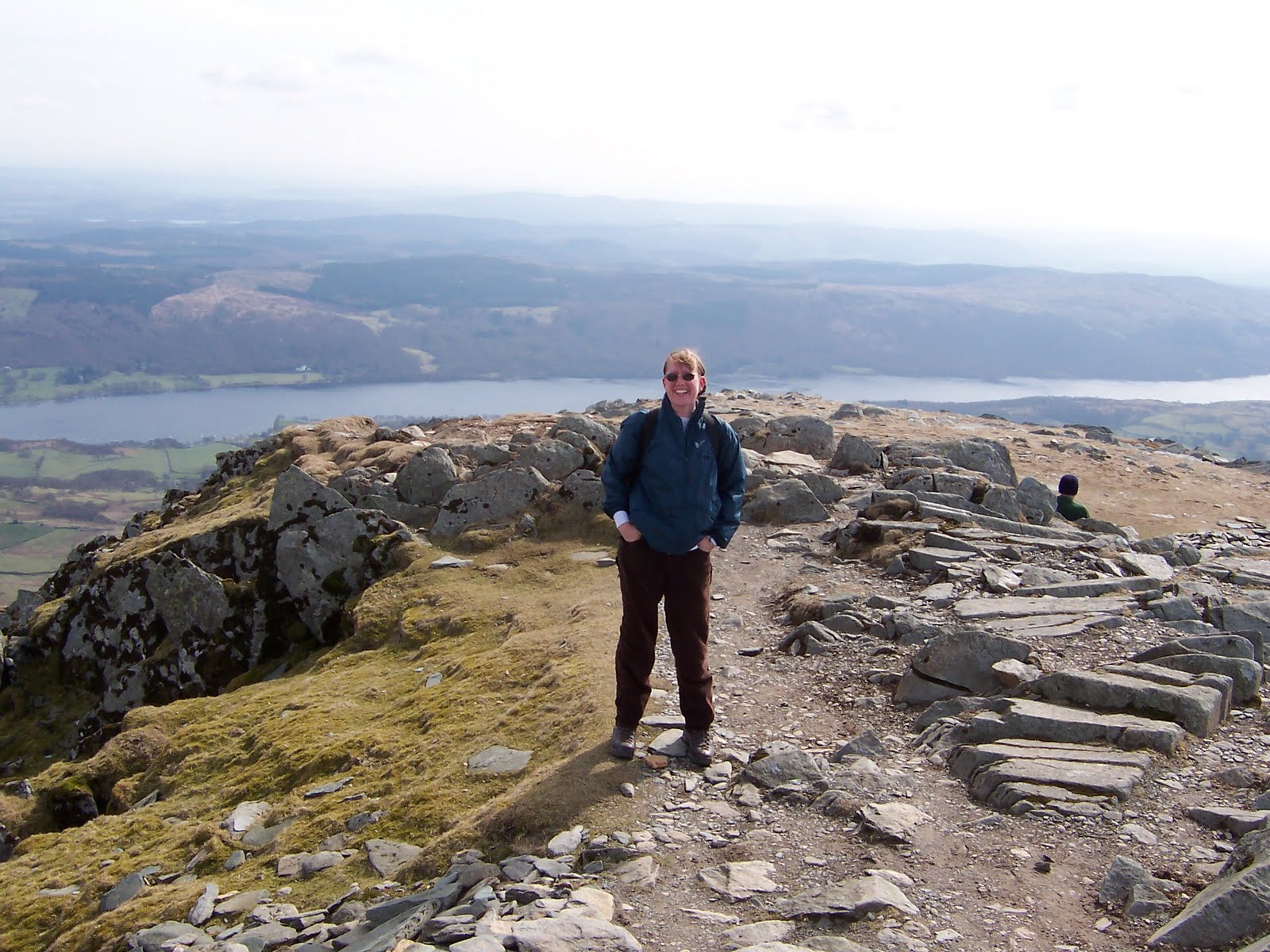
College did get me to places like this
(Coniston Water, Cumbria, England, 30 March 2004)

I went back. For seven years, I went back. But while there were things I loved about college I can’t say I ever found the point of equilibrium between these two poles of ecstasy and despair. I threatened to drop out of school literally every semester I attended. All through undergrad, and then again in graduate school. It was always a deliberate decision to walk back in the door the following term.

It’s hard to talk about why the experience was so difficult for me. Yes, it got better. And yes, there were always reasons to stay: amazingly dedicated, energetic, and insightful professors; articulate, thoughtful, and generous fellow students; resources to pursue the ideas that galvanized me; opportunities to travel, to present papers, and connect with fellow scholars and like-minded folks. When I talk about the poisoned feeling in my bloodstream whenever I’m in institutional spaces of education, I know it hurts a lot of people near and dear to me, who are doing good work in those spaces, and who have found a home there — for better or worse. I’ve learned over the years to make it as personal an observation as I can, though obviously my critique of institutional schooling is broader than a simple “I don’t thrive there.” I think many people don’t thrive there, and yes, I have a problem with that. But many people do … so I don’t know what to do with that.

When I returned to grad school in 2007, after two years of incredibly freeing non-school life, I was taken aback by how much I resented the return to academia — even as I was excited about launching my library science career. My emotional, mental and physical health had almost immediately improved when I graduated from college in 2005: I’d started sleeping better, eating better, feeling more energetic and experiencing a stronger libido; my mood felt more stable and positive, even in the face of uncertain job prospects.  And my first year in graduate school (combined, to be fair, with a cross-country move) brought on nausea, shortness of breath, weight loss, and other symptoms of fairly extreme anxiety.  As early as the road trip out to Boston, I was already writing in my journal about the misgivings I had about returning to school and the feelings of claustrophobia and regression they engendered. I felt like I was returning to being a teenager again, somehow erasing the experiences of the intervening decade.

It was not a good feeling.

This was hands-down the best part of graduate school,
apart from meeting Hanna there.

I got through it. I’m not sure, yet, whether to look upon graduate school as an improvement on undergrad or vice versa. Without the economic luxury of being a full-time student (as I had been in undergrad), I was forced (and intentionally chose) to maintain a life outside of school that was ultimately much more meaningful than what happened inside the walls of Simmons, both professionally and personally. I will be forever grateful to the Simmons dual-degree program for making the space I needed to begin my research on the Oregon Extension; at the same time, the project itself was borne out of the way in which my psyche responds to institutional education — as a coping mechanism to help me exist in a hostile environment. But I left graduate school no more enamored with the structures of school than I had been in college. And while the sea-change in well-being post-graduate school hasn’t been as marked as it was after I finished my BA, I have noticed a definite turn for the better when it comes to my own emotional and mental stability, my energy level, and the juggling act of work-life balance that follows us everywhere. As the students flood back into Boston this fall and classes begin again, I am unambivalently thankful not to be in their midst. Even as I make plans to pick up my research and writing once more.

For the first seventeen years of my life, school was simply something that didn’t apply to me. For the past thirteen years, it’s been an inescapable part of where I wanted to go and how I had to get there. Now, I have the chance to exist on the outside again. I think, though, the scars will linger. And I mean that in a positive as well as negative way: scars as markers of how experience changes us. It will color how I study and think about education and learning, about schooling and unschooling. It will inform how I think about the ways in which we, as a culture, choose to organize human life and make sense of our existence.

Many people in my life maintain, with great personal conviction, that I will make my way back to the classroom again — either as a student or as a faculty member. I myself am far from sure. For the first seventeen years of my life, I explored the world without the framework of school. I’m kinda looking forward to getting back into that rhythm, seeing how the old clothes fit.

← Older posts
Newer posts →
"the past is a wild party; check your preconceptions at the door." ~ Emma Donoghue

Recent Posts

  • medical update 11.11.22
  • medical update 6.4.22
  • medical update 1.16.2022
  • medical update 10.13.2021
  • medical update 8.17.2021

Archives

Categories

Creative Commons License

This work by Anna J. Clutterbuck-Cook is licensed under a Creative Commons Attribution 3.0 Unported License

Meta

  • Create account
  • Log in
  • Entries feed
  • Comments feed
  • WordPress.com

Create a free website or blog at WordPress.com.

  • Subscribe Subscribed
    • the feminist librarian
    • Join 37 other subscribers
    • Already have a WordPress.com account? Log in now.
    • the feminist librarian
    • Subscribe Subscribed
    • Sign up
    • Log in
    • Report this content
    • View site in Reader
    • Manage subscriptions
    • Collapse this bar