• anna j. clutterbuck-cook
  • contact
  • curriculum vitae
  • find me elsewhere
  • marilyn ross memorial book prize

the feminist librarian

the feminist librarian

Author Archives: Anna Clutterbuck-Cook

on gaining weight

20 Friday Jun 2014

Posted by Anna Clutterbuck-Cook in life writing

≈ 2 Comments

Tags

bigotry, feminism, food, thankfulness, the body

Photograph by Laura Wulf

I had my annual physical last week, and for the first time in a couple of years I actually looked at the reading on the scale when they did all the usual readings. Typically, I stand on the scale facing away from the screen and the nurses at our awesome community health center don’t offer the information unless I ask.

I’d gained about ten pounds since the last time I’d bothered to check.

I was (surprising even myself) pretty unconcerned about this state of affairs.

I’m not going to share the exact number or the number(s) I’m comparing it to. The minute I did so virtually every woman reading this post would do the calculation and contrast and compare. Either I’d be smaller, and some part of them would feel jealous, or I’d be larger, and some part of them would feel virtuous. They might judge themselves for feeling that way (I do when I catch myself doing it), but for most of us it’s an involuntary reflex.

There’s a reason I don’t own a scale, and weigh myself at the doctor’s office blind.

As photographs on this blog demonstrate, I’m a 5′ 10″ woman who falls within the median weight range for American women — which is to say that my clothing sizes are usually available in many styles in most stores. This is a form of privilege, one I’ve become even more acutely aware of married to a woman whose body is actively marginalized by our fatphobic, sizest culture.

But, like virtually every women and many a man will tell you, being a body of normative size in a culture “at war” against fat (and people we judge for their size) is no proof against a disordered relationship with one’s physical self. While never diagnosed with a formal eating disorder, I spent most of my teens obsessing over food and weight, counting calories, bingeing, eating until my stomach hurt and falling asleep each night (yes: every night for nearly a decade) wishing I could just purge and have done with it.

I ended every day — every day — from age sixteen to twenty-four feeling some measure of failure for what I had eaten, and what I had done, with my body.

My own struggle with disordered eating was complicated by the fact that my thyroid condition, managed with medication until age twenty-five, meant I was almost always hungry. My appetite was not a reliable measure of what my body actually needed as fuel — my hormones were telling me I was hungry. I could (and did) eat gallons of ice cream at a sitting and my body would still tell me I was hungry.

When I finally received medical treatment that treated my condition more effectively, I got my libido back and learned what it was like to have an appetite: to eat and feel full. And not think about food every waking moment of every day.

While I was never diagnosed with an eating disorder, I was at my thinnest — received the most praise from acquaintances for having “lost weight!” — when my hyperactive thyroid was raging out of control. Did I glow with “pride” at the praise? Some part of me did. The other part of me recognized how fucked up our culture is congratulating a young woman for thinness — as if body size is some sort of merit metric. When instead, in my case, it was actually a pathological symptom.

One I knew even at the time part of me would miss, because being “effortlessly” thin (while, as I said above, obsessing about my weight and food intake on an hourly basis) was something society rewarded me for.

I was scared, when I chose the treatment that would help me heal — that would give me my sex drive back (though no doctors thought to mention this as a perk) — that would allow me to experience appetites and satisfaction — when I chose the treatment that would give me these things, I was scared that I’d just become “fat.”

Because of course, that’s what we’re taught to fear most of all.

So it was remarkable to me, last week, when I walked into the doctor’s office and discovered that I now weigh about thirty pounds more than I weighed at the point when I was the sickest (and most obsessive — and most frequently praised). It was remarkable that I didn’t much care.

I’m growing into myself. That’s what I thought. I’m growing older. And my mind meant that in a positive way. I’m thirty-three now; nearly ten years older than I was then. Bodies change. As I grow into my middle age, I may continue to gain weight slowly, incrementally. If family size and shape is any guide, I’ve likely settled more or less at the point where I will probably stay as I grow older.

And even if I grow larger, become more, I resist the notion that this is something I should categorically fear, manically avoid, judge myself in relation to. I’ve got other things to focus on, thank you very much. I refuse to spend my energy struggling to control my body size when there’s overwhelming evidence to suggest that such efforts are both futile and unrelated to one’s overall health outcomes.

I refuse to fear in myself what I embrace in others: embodiment in the selves we have.

I’m grateful for how little the number mattered. It’s been a long journey to this point, but well worth the climb.
once again upon a listserv: some follow-up thoughts about #thatdarnlist

18 Wednesday Jun 2014

Posted by Anna Clutterbuck-Cook in library life

≈ 4 Comments

Tags

archivists, being the change, sociology, technology

Note to non-archivist/librarian readers: this blog post is largely professional insider discussion and, while it may be interesting to some of you it will likely be tl;dr for many others. You have been warned!

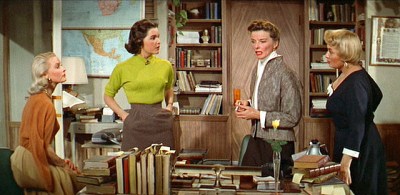
a radical feminist cabal (via)

In the three weeks since I published my post about professionalism, privilege, and power, discussing the Archives & Archivists listserv, I’ve had further interesting adventures — both inspiring and dispiriting — around what I wrote, how I wrote it, and the manner in which it was shared. Having (mostly) weathered that storm, I offer a few further thoughts about what went down, and how, and the manner in which I’ve chosen to participate in this conversation moving forward.

My last substantive listserv email on this subject went out to the listserv on June 5th and can be read here. The two listserv threads to which that message refer can be read in their entirety here and here. What I would like to share in this post are two items of gratitude, four items of critical reflection, and finally an invitation.

For those wishing to skip straight to the invitation,
please see my sounding of interest.

Continue reading →

booknotes: phyllis schlafly and grassroots conservatism

16 Monday Jun 2014

Posted by Anna Clutterbuck-Cook in book reviews

≈ Leave a comment

Tags

history, politics

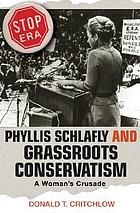
I’m back in encyclopedia entry writing mode this month, and one of the subjects I volunteered to tackle was the life and work of Phyllis Schlafly in 750 words. One of the things I have gathered from Donald Critchlow’s excellent Phyllis Schlafly and Grassroots Conservatism: A Woman’s Crusade (Princeton, 2005) is that Schlafly herself would likely approve of this creative discipline. She has, after all, built a career out of voraciously consuming and digesting the work of conservative intellectuals — and then translating them into a form easily communicable to the grassroots: speeches, pamphlets, articles, press releases, and runaway bestsellers.

Plus, did you know she comes from a family of lady librarians?

It is a mark of Critchlow’s excellence as a biographer that he is able to humanize his subject and make her interesting and compelling to even this lefty feminist who categorically disagrees with Schlafly on almost every political and social issue she has ever engaged on. Critchlow’s is an intellectual-political biography, touching on Schlafly’s personal details — family background, class status, marriage, children — as background for the larger points he wishes to make regarding her public career. Schlafly, he argues, is both a driving force behind — and emblematic of — the grassroots political organizing that flourished in America’s postwar years of supposedly “liberal consensus.” A voracious autodidact and driven student from a lower-middle-class background (she worked night to put herself through college), Schlafly completed a Master’s degree at Radcliffe in 1945 and took herself to Washington D.C. just as the Second World War was ending, landing a job at the fledgling American Enterprise Association (now Institute). By all accounts she had (and still has) a talent for digesting densely-written works of conservative political theory and translating them into vernacular, politically-motivating works. During the 1950s and ’60s her focus was on anti-communism, fiscal conservatism, and national defense; in the 1970s she discovered (anti)feminism and turned from international concerns to domestic policy and cultural issues — earning the hatred of many a committed feminist through her successful STOP ERA campaign, which killed what many had assumed was a foregone Constitutional amendment explicitly outlawing discrimination on the basis of sex.

I am too young to remember first-hand the bitter disappointment of the ERA’s defeat, or the shocked sense of betrayal I think many American feminist felt when she discovered that not all women believed in feminist goals. Perhaps because of this, I have the emotional distance to appreciate the way Critchlow is not overtly partisan — either for or against — the Schlafly perspective. Instead, he clearly articulates how her work connected, and continues to connect, to the concerns and goals of the resurgent political and cultural right during the latter half of the twentieth century. I cannot say I share those concerns or goals, but perhaps I understand where they came from and how they came to be articulated a bit better than I did before.

My only disappointment with Phyllis Schlafly and Grassroots Conservatism is perhaps an unfair one — that Critchlow only glosses events following the defeat of the ERA and Reagan’s rise to the presidency in the early 1980s. Since Schlafly and her Eagle Forum continue at a tireless pace today, a deeper analysis of Schlafly’s enduring influence would have been welcome. Too, I would have been interested in a more substantial tour of her opponents’ (often muddled) rebuttals and (often failed) strategies. One comes away from Critchlow’s examination with the sense that Schlafly was always effectively on-message. Surely even the most charismatic of public figures has an off day.

one month later … [#move2014]

12 Thursday Jun 2014

Posted by Anna Clutterbuck-Cook in a sense of place

≈ 2 Comments

Tags

boston, domesticity, family, move2014

It’s been a month you guys!

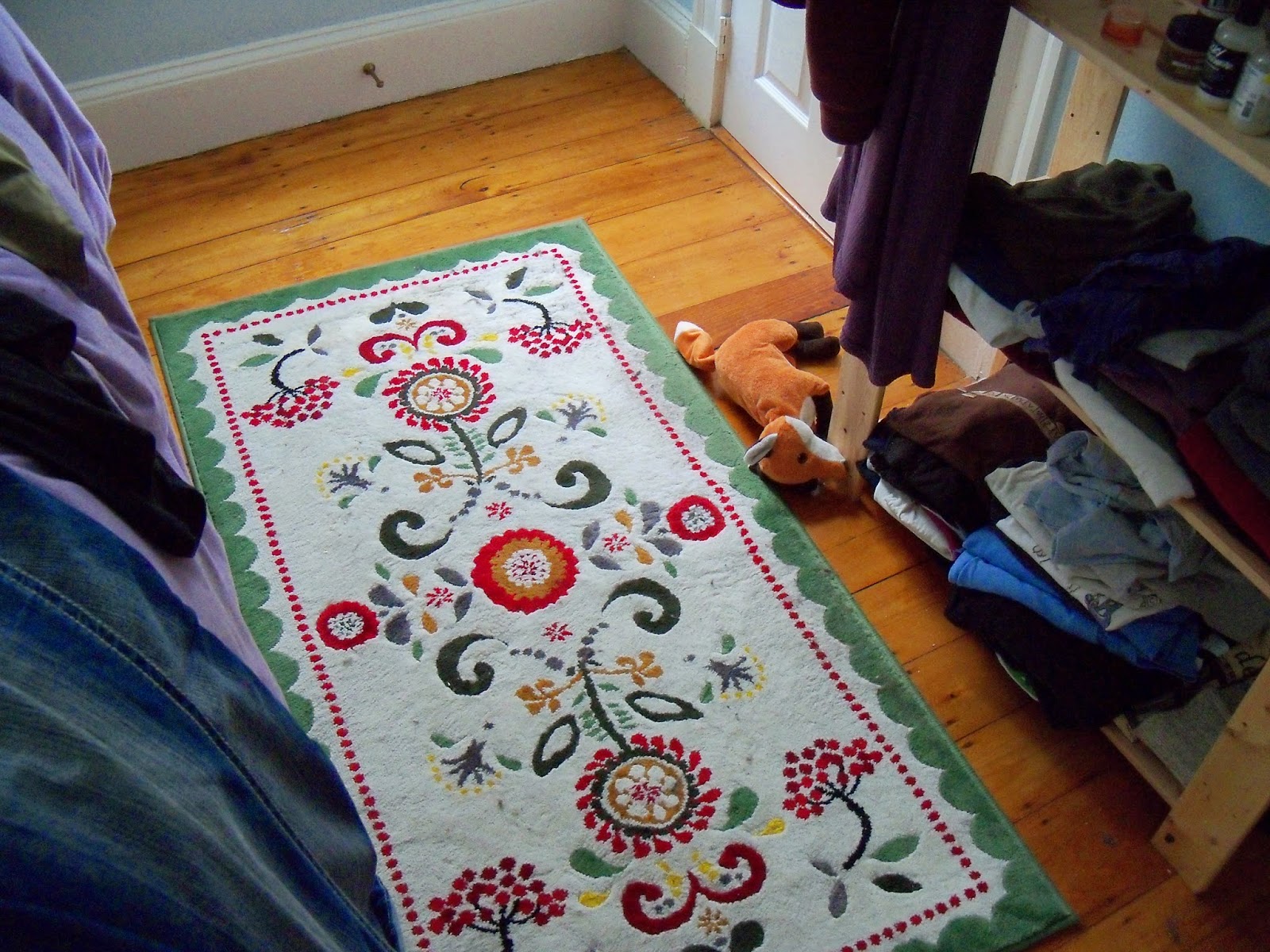
We can still see the rug on our bedroom floor, and the only thing under the bed are dust bunnies and the occasional cat.

I don’t have anything super-noteworthy to say, I just wanted to mark the day. It really is hard to believe we’ve been living a month in our new place. Some eclectic observations:

  • I don’t miss our old neighborhood as much as I thought I would. Is that disloyal? I’m not sure yet. Part of the reason is that we still live in the same city and maybe 80% of our time is spent in the same spaces as before the move. Hanna and I both miss walking passed the brookline booksmith more days than not, and being near Trader Joe’s, and 4A Coffee on Harvard Ave. but other than that … I’m so actively happy to be where we are in so many ways, I don’t have room to miss the old. I wonder if I ever will? Maybe I’m done with that chapter and ready to move on.
  • Maple trees have a distinctive presence and sound to them; I grew up in a house surrounded by old maples and hadn’t realized until moving to JP that I missed them. Now when its windy or rains and I hear the trees outside I can relax. Sleeping has been a wonderful thing because the sounds are right again.
  • Having a porch expands the size of our apartment beyond its already wonderfully expansive 860 square feet.
  • A ceiling fan (in our living room) is amazing as a tool for cooling the space on hot days.
  • Kitchen counters! Kitchen counters! Kitchen counters!
  • For some reason, Hanna and I decided to start using the dishwasher when we moved here, despite the fact we never used the “adult box” that was in our old apartment. I am really surprised at how much it lowers the stress level of our evenings and makes cooking together a pleasurable activity. Sometimes, labor-saving devices are worth the hype.
  • We now live in a neighborhood with a much higher Latino/a population than Allston, and that’s something else that feels like home (Michigan) to me in a way I hadn’t noticed missing until we were passing neighbors on our way home with a much broader range of ethnic diversity than on our previous commute. Even the music from the car stereos that pass our front windows feels more familiar. (And yum! the Cuban restaurant up the road makes the best horchata!).
  • Gentrification. It’s a thing, and I’ve been thinking about it. I have days where I’m like, “What’s so elitist and destructive about wanting to live within walking distance of where you work?” That is, after all, the way most workers have gotten to work for centuries. But I’m also aware that as early-career professionals, Hanna and I fit a profile — one of people who are actively courted and catered to. While our neighbors here are often invisible at best and actively erased at worst. According to the Boston Globe, only about 15% of market-rate housing in JP is “affordable” … for families making $80k per year. There’s a lot of upward pressure on this already impossible market. We’re working to do what we can not to contribute to that, while embracing JP as a (hopefully long-term) home for us as well.
  • Did I mention how wonderful a back porch is to enjoy? 
  • And neighbors that invite you to their barbecues instead of engaging in intimate partner violence on a near-nightly basis?
In other news, how did it get to be June 12th already? I hope all of you are having a fruitful beginning to whatever the nature of your summer season will be.

booknotes: otherhood

09 Monday Jun 2014

Posted by Anna Clutterbuck-Cook in book reviews

≈ Leave a comment

Tags

children, feminism, gender and sexuality

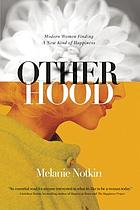
It’s been awhile, what with one thing and another, since I actually did a book review post. I’m hoping to get at least one per week posted during the summer, so to kick us off here’s this week’s title: Otherhood: Modern Women Finding a New Kind of Happiness by Melanie Notkin (Seal Press, 2014).

I ordered Otherhood through inter-library loan after seeing it mentioned in positive terms in a piece on how the media fuels women’s panic and self-judgement around pregnancy and fertility. From the gloss in the essay, I expected a study of women who found themselves single and/or childless as they reached the end of their fertility, and how they made peace with that circumstance. Perhaps it was poor or wishful reading on my part, because this book is not that book. Instead, this book is a hybrid personal memoir longform journalism piece in which Notkin seeks to connect her personal experience, and the experiences of her single, childless (but child-wanting) friends, to broader social and cultural narratives and trends about this demographic.

Apart from it not being the book I expected (which is hardly grounds for critique of the book it actually is), I had three major problems with Otherhood: its solipsism, its heterocentrism, and the way it embraced notions of gender complementarity and retrograde gender roles. All of these problems interconnect, because when one is writing about personal experience as universal experience, then obviously one’s own wants and needs eclipse the diversity of human desire. There’s nothing particularly wrong with Notkin yearning for a man willing to treat her to lavish dates, for example, but there is something very wrong about her making the argument that “we women” want a man who knows what kind of high-priced alcohol to order for every occasion. In Notkin’s world of high-powered New York businesswomen in their late thirties and early forties, all women are straight, looking for male booty, looking for a man interested in a long-term relationship and kids, expecting that man to fit a very specific type of masculinity, and unwilling to revisit those expectations when the world doesn’t deliver.

It’s not that I think Notkin and company are “too picky” or “desperate” and that’s what makes them unappealing. As someone who didn’t date at all for the first twenty-seven years of my life, because no one I met piqued my interest enough, I hardly have a leg to stand on. It’s just that I find Notkin’s list of priorities for a partner kind of obnoxious, and I find it even more obnoxious that she assumes we all (as “women”) share them.

Otherhood is also at war with its own thesis, which is that older single women (like Notkin) aren’t waiting around for Mr. Right but are instead focused on living otherwise fulfilling lives, even in the absence of the partner and/or children they have always desired. Most of the narrative is, in fact, taken up with stories about she and her friends working their asses off dating one guy after another — each of whom proves a disappointment — and obsessing about their decreasing fertility. I finished the book feeling more than a little whip-lashed.

At its best Otherhood argues that, in the fullness of any single life situation, sometimes the price just isn’t worth it. Even if you always imagined, and continue to desire, having children of your own. Notkin is trying to push back against the cultural narrative (of her elite circle) that single women nearing the end of their fertile years should just go it alone and get pregnant solo — or else they’re somehow less dedicated to their vocation as women than the ladies who freeze their eggs at twenty-five and start IVF at thirty-five whether they have a partner or not. There’s some really interesting stuff to unpack there, in the cultural pressure of women to become mothers at any cost because somehow it is our ladylike destiny. But Notkin doesn’t push her inquiry to the level where I would find it most interesting or pertinent — the level where the gendered framework of dating and parenthood is, itself, called into critical question.

In the end, I felt sorry for Notkin and her circle of friends for the way in which their narrow view of “male” and “female” gender performance seemed to be limiting their ability to build authentic relationships that went beyond judging themselves and their partners in relation to socialized gender expectations. The dating dance they describe is one I never participated in with men — or women for that matter — and it doesn’t sound like a very fun way to get to know someone. Notkin and her friends deride some of their potential dates for wanting casual hang-out time, or an evening in enjoying sex and a pizza — the sort of get-togethers that sound pretty awesome to me. I finished the book wishing I could just get all the people therein (women and men alike) to just relax around one another a little more.

Reading Otherhood I felt a flood of gratitude for queer visibility. For all the talk of a “gayby boom,” and the increasing normality of same-sex parenting, queer couples have a long and storied history of not parenting. Perhaps because our sexual intimacy doesn’t bring with it the expectation of pregnancy — because parenting must be deliberately pursued, often at a high price, and with legal and social roadblocks in our way — queer culture doesn’t demand that we make the pursuit of children a primary objective in life. Even before I felt able to identify as queer, I drifted toward lesbian and queer spaces for the alternate visions of family they offer up for consideration. These are visions I found world-expanding and life-affirming when I was “straight,” and I wish that more women like Notkin (and perhaps the men she is struggling to connect with) would turn to these examples for a renewed sense of possibility.

In short? If you’re interested in thinking about a life unpartnered and/or not parenting, ditch Notkin’s side-swipes at “spinsters” and women who don’t “keep up appearances” and go read some queer history instead. There’s lots of inspiration out there, if you know where to look.

cats + porch [#move2014]

04 Wednesday Jun 2014

Posted by Anna Clutterbuck-Cook in a sense of place

≈ Leave a comment

Tags

boston, cat blogging, domesticity, family, move2014, outdoors, photos

We continue to feel so lucky in finding this apartment, particularly on sunny Sundays in June, when our back balcony is a breezy, cozy sanctuary; a liminality between in and out, private home and neighborhood society.

We enjoyed brunch together last weekend, along with a little light reading.

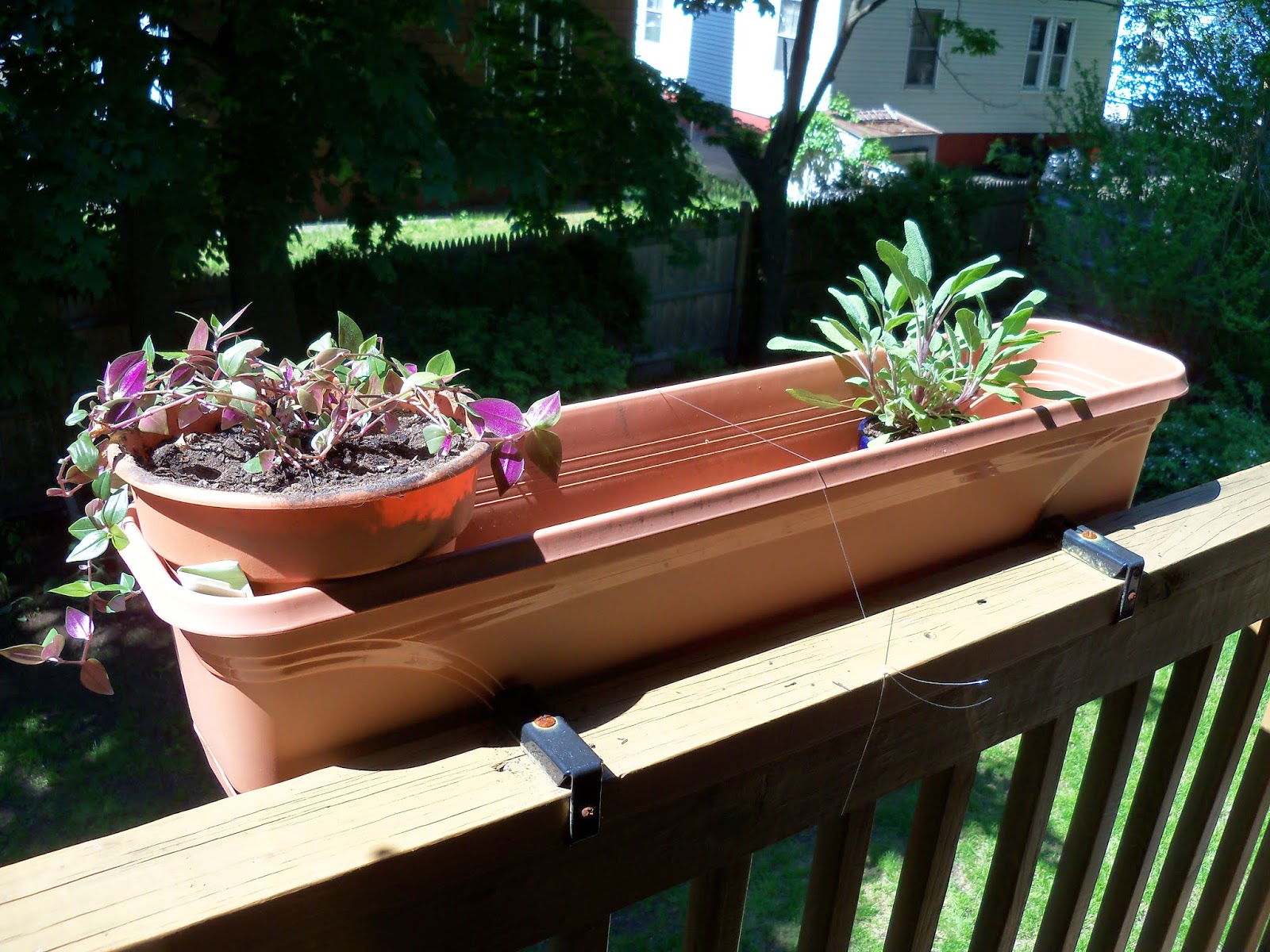
Repotted some happy plants…

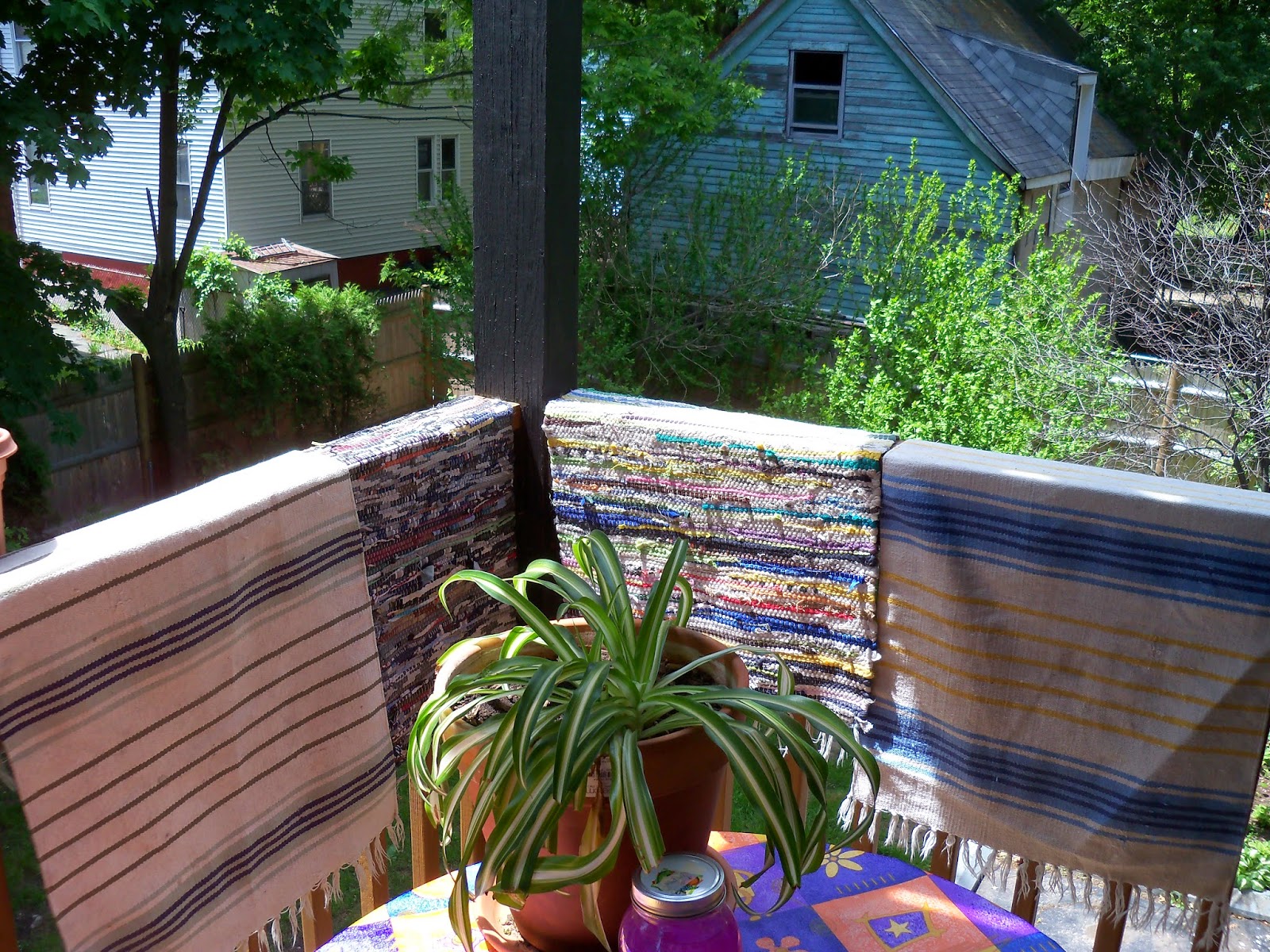
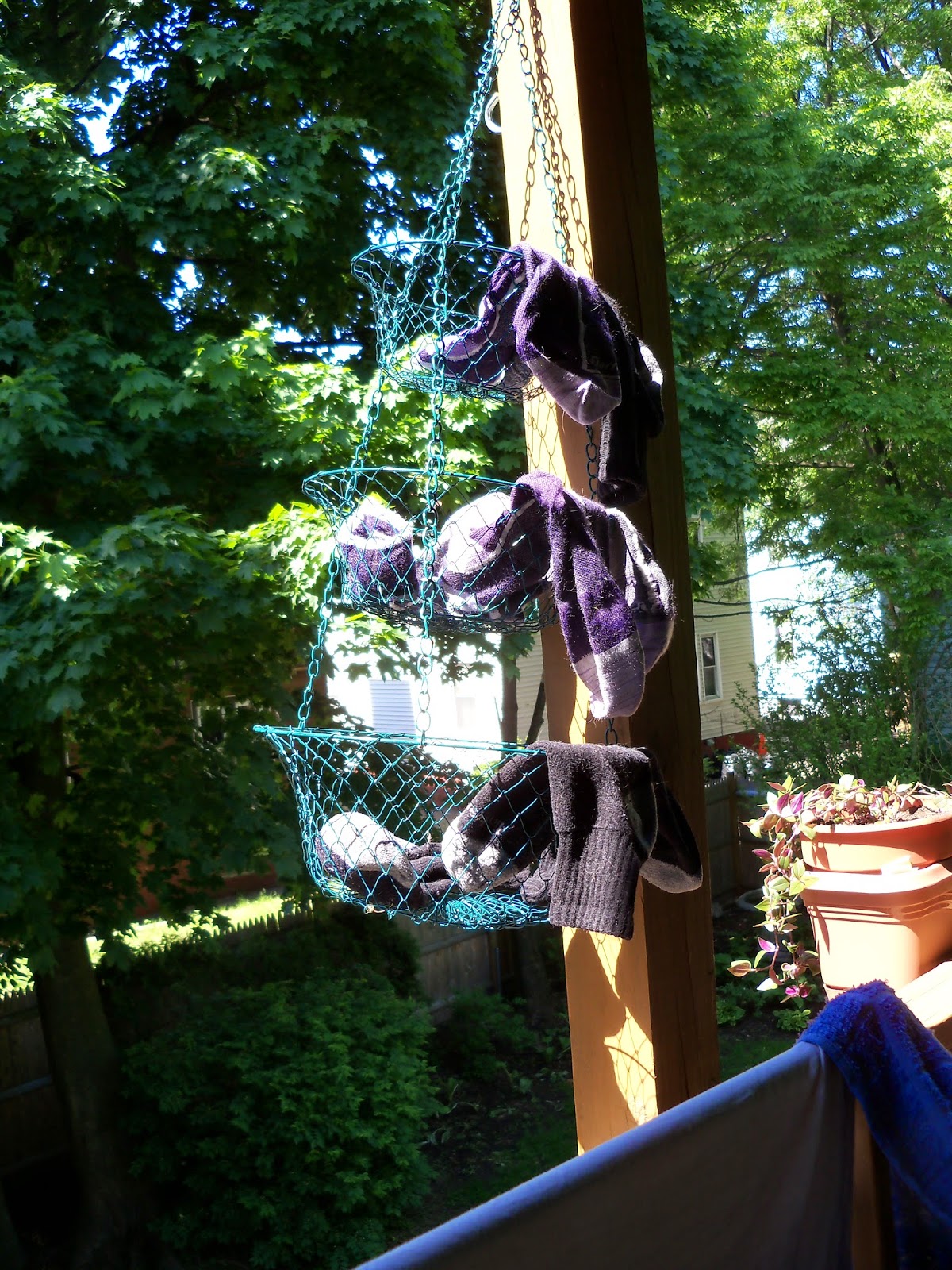
… and got creative drying the week’s laundry in the fine weather.

The porch is a new experience for the cats, who are practicing giving their mother attacks of the nerves by exploring the top of the (second floor! far from the ground!) railing without a net. We feel they should could equipped with safety tethers.

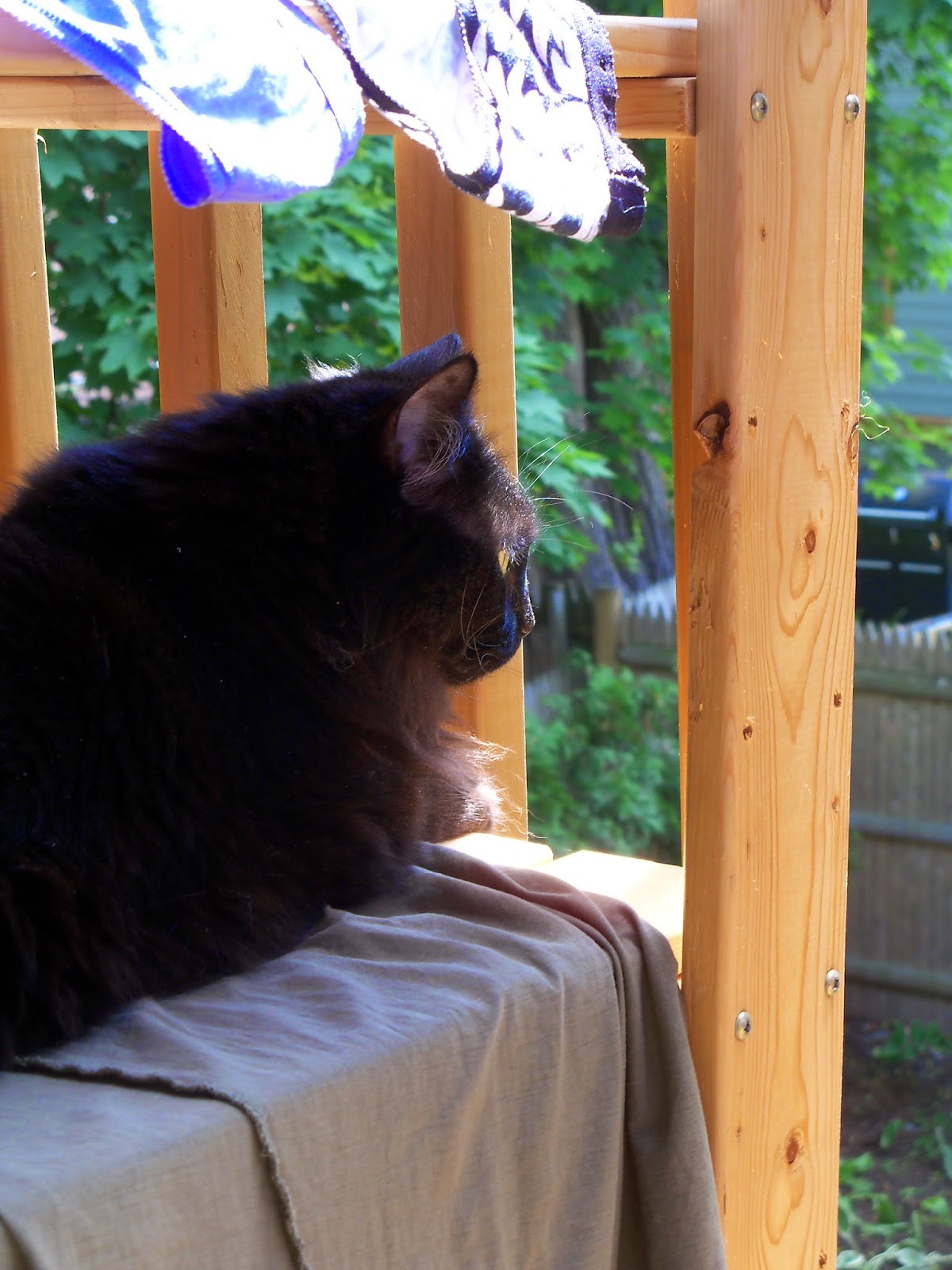
Geraldine seems largely content to chill in the shade or sun and survey her surroundings.

The clean laundry is obviously the best place for a black cat to settle in for a nap.

Meanwhile, our next door neighbors M and J have gotten a head start over us in the gardening department, with lots of promising seedlings that spent the weekend drinking up the sun and water they were afforded.

Hope y’all are finding ways of being in this early-summer moment. Happy June.

ownership and choice [#move2014]

02 Monday Jun 2014

Posted by Anna Clutterbuck-Cook in a sense of place

≈ Leave a comment

Tags

big ideas, boston, domesticity, family, move2014

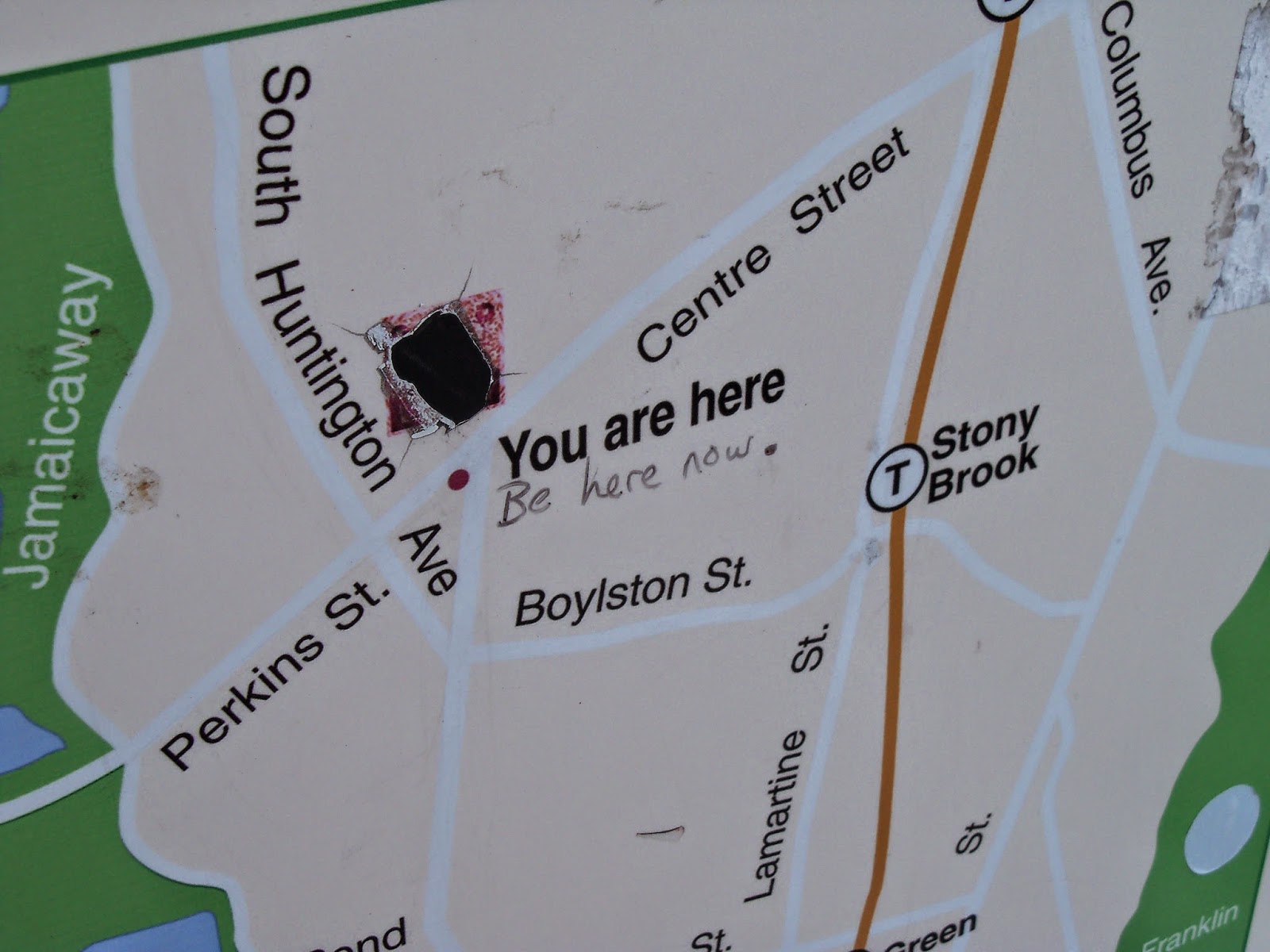
Annotated street map, Hyde Square, Jamaica Plain (Boston, Mass.)
Photo by author.

I started this blog post last week and somehow it failed to save automatically, erasing several full paragraphs of text. Damn you Google, the way you lull us into complacency with your automatic back-ups! Still, I’ve continued to think about the themes of this post in the intervening week and will write a different post now than I would have last Sunday. And I think I’m mostly okay with that.

Ownership, and choice.

Last weekend, Hanna and I had a conversation about buying furniture. Our household is currently composed of some odds and ends, a few really awesome, we’ve picked up through the street-side equivalent of dumpster diving and IKEA purchases, again some quite excellent. Hanna moved here following an escape from an abusive relationship and a string of insecure housing situations, neither of which lent themselves to long-lasting furniture investment; I moved here from the Midwest with everything I needed for grad school packed into the back of an “economy” car rented from Enterprise. We’ve been constructing our household from the ground up.

The discussion we had was about buying some non-IKEA furniture, specifically a coffee table and a couple of bedside tables (perhaps matching!) for lamps and the inevitable stack of books-to-be-read we both accumulate. It would be nice, we feel, to have bedside tables with little drawers so Teazle won’t spend the hour between 2-3am every night trying to wake us up by swiping our spectacles onto the floor.

We’ve been thinking about L.L. Bean this time around, specifically their “Mission” or “Rustic” lines, which for us means maybe a piece or two per year depending on the size of the vet bills and how much we care about traveling to England in the next decade.

Then last weekend I got thinking, if we’re going to spend $500 on a coffee table or $250/piece on a pair of end tables, maybe we could do better than give that money to Bean’s. They’ve a good reputation as an employer, and are regional, sure. Their pieces are made here in the U.S. But what if we went a step further down this path and actually hired a local woodcrafter to do the job?

“I dunno, I guess I’m just not used to having the money to make that kind of choice,” Hanna observed. “It makes me anxious. I mean, it’s always the way I wanted to spend money, but Evil Ex always fought me on it. And then when I moved down to Boston I was worried about feeding myself and paying rent.”

See, despite the fact that we’re still renting (and yes, as we prepared to move everyone kept asking us if we were buying; there’s a whole separate post in me about the unexpected pressure I feel as a married person in my thirties to buy into the real estate market — it’s seriously more pressure than we’re feeling about the babies thing, maybe because we’ve made that decision in the negative already) this feels like our first home as a married couple. Our first purpose-“bought” space. We made our grad student digs work for eight years — eight years? the management company rep kept repeating when I handed him the keys, eight years? whoa. that’s gotta be a record. — and while we made the move because we needed a bigger space, it was also a move that consolidated our commitment to Boston. Despite the fact we’re tenants, not owners, of this lovely new home, we already have a sense of ownership.

Because we’ve chosen to live here — this city, this neighborhood, this building, this space. So even though we’re still writing that check every month to the landlord, not the bank, we’re putting down roots. Hanna bought a sage plant. We’ve introduced ourselves to our next-door neighbors. We do our part wheeling the trash to the curb on Monday mornings.

We talk about hiring a local artisan to build our furniture, even if it means we’ll have to wait for a year to get those matching end tables with the drawers where we can keep our eyeglasses safe from questing paws.

Jamaica Pond, May 2014
Photo by author.

Because we can afford to wait a year. We’re thinking in those terms, now, more than we used to.

And it’s definitely a good place to be.

once upon a listserv: thoughts on professionalism, privilege, and power [#thatdarnlist]

29 Thursday May 2014

Posted by Anna Clutterbuck-Cook in library life

≈ 52 Comments

Tags

archivists, blogging, technology

Thank you to all whose thoughts helped form this post. 

Coincidentally, this is the 1200th post to go live at the feminist librarian. I’ve learned a lot from this idiosyncratic labor of love. It’s been great to have y’all along for the ride.

(via)

So a thing happened last week on one of the professional listservs I subscribe to. While I’m relatively new to this listserv, having been subscribed for roughly a year, I’ve been around long enough to know this is not an isolated happening in this particular online community. Similar incidents, involving many of the same players, have happened before. More importantly for this blog post, this thing that happened follows a wider pattern, one that will be familiar to most folks guilty of “blogging while female” or “blogging while queer” or “blogging while [insert marginalized identity group here].” As a veteran of the feminist blogosphere (at seven years and counting the feminist librarian is firmly middle-aged in Internet time) I’ve seen it happen before in other forums, and will no doubt see it again. It’s a worrying pattern, a pattern of unethically leveraged power and privilege, and I believe strongly that it needs to be named as such.

Thus, this post.

I’m going to tell the story of what happened without naming names or linking to specific emails in the listserv archive. Those of you interested in reading all 91 emails in the thread can find the archive here. Scattered additional responses can also be found seeded through the listserv archive from May 19 through May 23. Many of you will have already followed the exchanges in real time. Even so, I have chosen to describe what happened in archetypal terms because my goal here is not to reopen/rehash the details of specific exchanges. Rather, I hope to point out how the dynamic at play is a familiar one to many of us, particularly those of us on the receiving end of its toxic effect, and to bear witness to the way its poisonous effect ripples out under the guise of “professional” interactions. Continue reading →

twenty minutes of hypnotically adorable

28 Wednesday May 2014

Posted by Anna Clutterbuck-Cook in Uncategorized

≈ Leave a comment

Tags

cat blogging, fun, web video

Here. My two half-finished posts aren’t writing themselves so have twenty minutes of hypnotically adorable kittens to tide you over.

new perspectives on boston [#move2014]

20 Tuesday May 2014

Posted by Anna Clutterbuck-Cook in a sense of place

≈ 2 Comments

Tags

boston, domesticity, move2014, photos

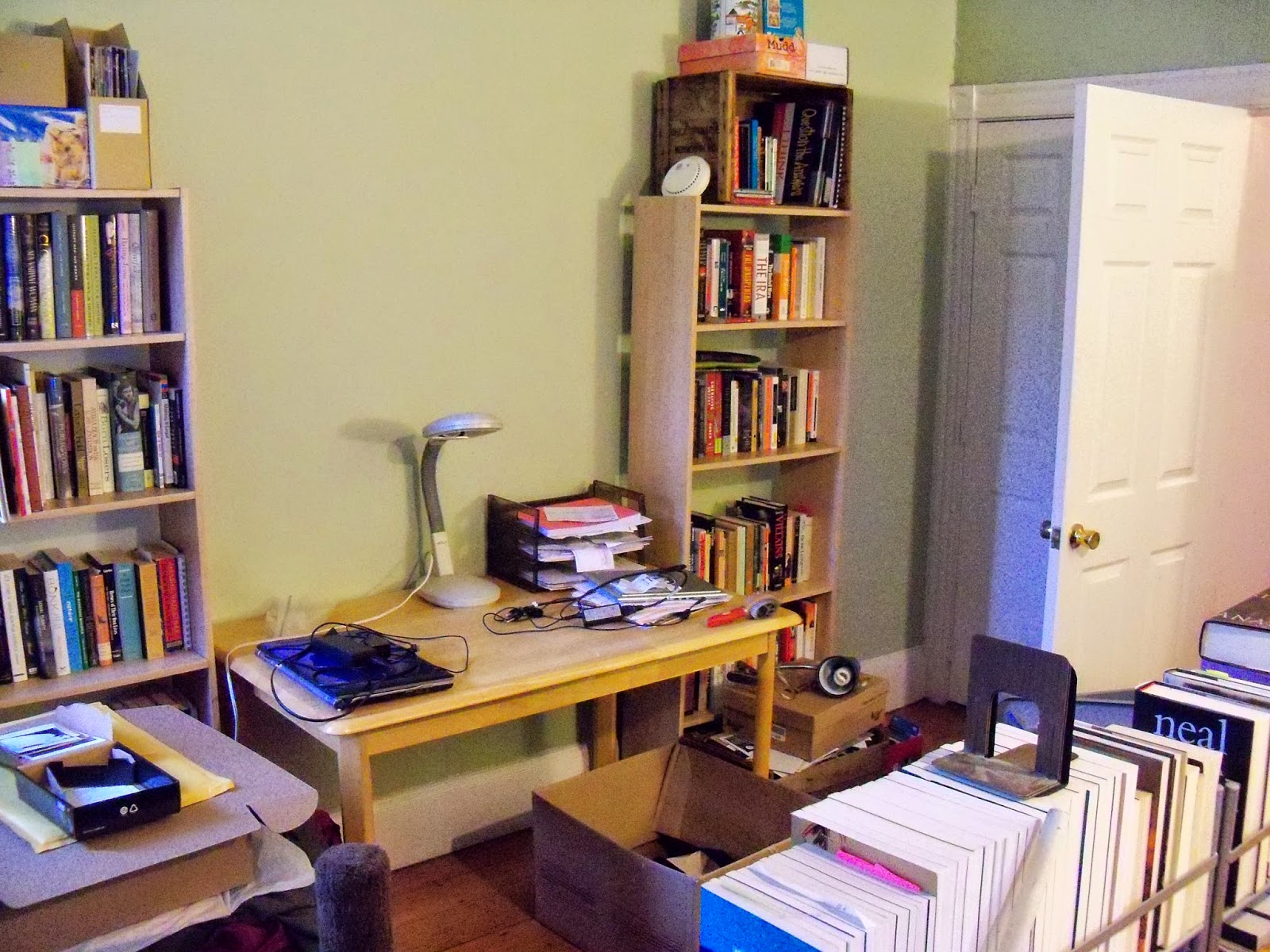
We almost have enough bookshelves…

We’re still unpacking here in J.P. but the living room is taking approximate shape. And I think my biggest observation from this first week in a new location in the same city is how much one’s understanding of a big city like Boston is filtered through the situational perspective of daily activity. I mean, “duh.” But we’ve shifted three miles south of our old home in Allston and suddenly our daily routine moves from one set of neighborhoods and local businesses to another.

Eventually, the living room will have an office space!

My initial impression is, weirdly enough, that Boston feels a lot more like a big city living in J.P. than it did living in Allston, on the edge of Brookline. Living in Allston, most of our daily routine happened in The Fenway/Longwood/Brookline neighborhoods, and Brookline definitely feels like a self-contained village enveloped by the greater metropolitan area of Boston. Jamaica Plain, too, feels like a very distinct neighborhood — but within the city of Boston. It feels very conscious of its status as part of Boston, and I feel woven into the fabric of big city life in new ways. No longer does my evening commute cut passed Fenway Park and up Beacon Street through Coolidge Corner … now I cycle by Symphony Hall through Roxbury to Jackson Square along the reclaimed Southwest Corridor Park.

“Kitty TV” has a new view…

Here are some of our discoveries from week one:

  • Ghazal makes (and delivers!) tasty Indian fare
  • The Southwest Corridor Park offers me a safer, more peaceful bicycle commute
  • Koo Koo Cafe is not a new discovery, but is now on our walk to work!
  • As is Green T Coffee, on those days when our path through
  • Olmstead Park is too meandering a route to Countway
  • The local fabric and yarn shop, JP Knit ‘n Stitch, where we picked up fabric to recover our ageing IKEA chairs
My selection…

… and Hanna’s

In the coming weeks, we’re looking forward to checking out:

  • The Thacher Milk Delivery service we saw drive by this morning
  • Jamaica Plain Historical Society’s historic walking tours on summer Saturdays
  • The Boston Building Resources organization, even though we’re renters not owners
  • The Allendale Farm garden center and more local Agricultural Hall for some herb & vegetable starts for our sunny balcony

Hope all of you are well! Those of you whom I owe emails, I haven’t forgotten! The moving exacerbated my tendinitis and exhausted us generally … last night I was mostly asleep by 7 o’clock. Little old lady hours. But I haven’t forgotten you!

❤

← Older posts
Newer posts →
"the past is a wild party; check your preconceptions at the door." ~ Emma Donoghue

Recent Posts

  • medical update 11.11.22
  • medical update 6.4.22
  • medical update 1.16.2022
  • medical update 10.13.2021
  • medical update 8.17.2021

Archives

Categories

Creative Commons License

This work by Anna J. Clutterbuck-Cook is licensed under a Creative Commons Attribution 3.0 Unported License

Meta

  • Create account
  • Log in
  • Entries feed
  • Comments feed
  • WordPress.com

Blog at WordPress.com.

  • Subscribe Subscribed
    • the feminist librarian
    • Join 37 other subscribers
    • Already have a WordPress.com account? Log in now.
    • the feminist librarian
    • Subscribe Subscribed
    • Sign up
    • Log in
    • Report this content
    • View site in Reader
    • Manage subscriptions
    • Collapse this bar