• anna j. clutterbuck-cook
  • contact
  • curriculum vitae
  • find me elsewhere
  • marilyn ross memorial book prize

the feminist librarian

the feminist librarian

Author Archives: Anna Clutterbuck-Cook

booknotes: helping teens stop violence

05 Friday Aug 2011

Posted by Anna Clutterbuck-Cook in book reviews

≈ 1 Comment

Tags

children, education, gender and sexuality, human rights, politics, racialization

My latest early reviewer book from LibraryThing was the 20th anniversary edition of Allan Creighton and Paul Kivel’s Helping Teens Stop Violence, Build Community, and Stand for Justice (Alameda, CA: Hunter House, 2011). The authors have worked together in the field of violence prevention and social justice activism since the mid-1970s. This book is a workbook for adults seeking to work with young people, specifically teenagers, to identify and combat the various types of institutional and cultural injustice they encounter in their lives. “Professional literature about adolescents, social-service priorities, and funding trends all [emphasize] programs that [build] self-esteem,” the authors observe. “Many youth workers convey to young people that if they just had higher self-esteem, they could overcome any obstacle and succeed at anything they set out to do,” ignoring the institutionalized, systemic injustices young people as well as adults face in securing life necessities and building a satisfying life for themselves and their families (60). We do a grave disservice to youth, the authors argue, by implying that if they are struggling it is largely because of personal failure when, in fact, the problem is an imbalance of power:

Our problem [when we were young people ourselves] was not based on low self-esteem or any of the other psychologically defined problems. Rather, we had no real power over our lives. Without power to protect ourselves, we were constantly restricted, disrespected, and abused by adults. Everywhere we went, adults had the authority to decide how we should dress, where we could be, and who we could be with. They decided our future through daily decisions including discipline, records, diagnoses, arrests, report cards, evaluations, and allowences, or just by ignoring, interrupting, or neglecting us.(60-61)

The imbalance, of course, is not just one of age but also intersects with many other inequalities from which adults also suffer: poverty, sexism, racism, religious bigotry, discrimination based on disability and sexual orientation or gender identity … the list is a long and familiar one. Creighton and Kivel call on adult allies to work with youth in identifying these power imbalances and combat them. Those who benefit from inequality seek to divide the attention and alliances of those who are struggling to get by under oppressive systems. By forging networks of support among ourselves at the bottom of the inequality pyramid, the authors suggest, we can more effectively enact lasting social change as well as survive in present day far-less-than-optimal conditions.

Since the book is designed primarily as a workbook for group trainings, those who are reading Helping Teens Stop Violence outside of that context may find themselves skimming a bit and taking note of various exercises for later usefulness, rather than reading in a straightforward manner. I found myself skipping around quite a bit, once I’d read the introduction and gathered the gist of the authors’ perspective and approach. Some general impressions:

  • The authors have made an effort throughout to discuss the ways in which different types of injustice overlap and interact, so that even though (for example) a given chapter may be about “class” the exercises continually push us to think about how things like race, sexual orientation, immigrant status, etc., shape our class identities and economic opportunities.
  • As someone who is continually frustrated with the invisibility of ageism in our culture — even among groups of people willing to discuss and dismantle other “isms” such as sexism and racism, or address homophobia and access issues for folks with disabilities — I was really excited to see the first few chapters devoted to age-based discrimination, and exercises designed to get adults remembering their own teenage years and the lack of agency they had as young people in a world controlled by adults.
  • The authors emphasize the fluidity of what they call “target” and “non-target” categories (i.e. various types of social privilege), reminding us that our social status and agency is highly dependent on context and can change as the context changes — so that each of us have experienced both being part of a target group and being part of a non-target (privileged) group at various points in our lives.
  • Even without using this book as a workbook with a group, as it was intended, the various exercises often contain useful suggestions for how to intervene in situations where you see oppression happening in order to name it and (hopefully) stop the cycle of violence from continuing.
  • They also offer some good guidelines for having constructive and saf(er) discussions about difficult topics, recognizing that “we have all been hurt in various ways and have had lots of experience of not being listened to well, so we have developed a billion ways to protect ourselves from getting close to each other and becoming vulnerable to further hurt” (170). By structuring discussions in ways that may seem a bit stilted at first, groups can build enough trust by which they can have productive conversations about prejudice, violence, and institutionalized inequality.

Helping Teens Stop Violence will obviously be most useful to those who have immediate practical application for its suggested exercises and the resources listed in the back of the book (though I found their resource lists a rather odd mix, with curious gaps — particularly when it comes to the available literature on violence in education and violence against youth). However, it’s a worthwhile read for anyone who is interested in the practical aspects of social justice work at the grassroots level, and who is interested in thinking a bit more deeply about the way in which our culture has institutionalized ageism and systematically disenfranchises young people and children.
"Veg Mix": A Recipe from Kevin

03 Wednesday Aug 2011

Posted by Anna Clutterbuck-Cook in our family

≈ Leave a comment

Tags

family, food, hanna, maine

Cross-posted at Lyn’s Friends Feast.

30@30 will return next Wednesday, folks … I was up in Maine all weekend and just didn’t have the brain power to craft anything clever about my thoughts on parenting. In the meantime, enjoy deliciousness from summer in Maine!

Head on over to …fly over me, evil angel… for more photos from the weekend, if photos you so desire.

Hanna and I just got back from Hanna’s parents’ home in Maine, where they preside over an abundant vegetable garden and three chickens who provide lovely, lovely eggs (especially, says Hanna, if you feed them comfrey from the plants in front of the house).

Future summer squash.

We eat well and plentifully when we are in Maine, thanks to Hanna’s father Kevin who does most of the cooking. And we always come home with bags and boxes filled with vegetables picked straight from the garden and canned goods — hot pepper jelly, strawberry jam, pickled beets, and more.

A happy hen
(a Buff Orpington, Hanna says).

We have more than one recipe on file from Kevin (the “file” being a blue folder stuffed with bits of paper — something that deserves a post of its own one of these days!), but I thought I’d share this one with you because it’s so good for using up summer veggies. We find that the amounts listed here are roughly good for a two-person meal, with some possibly left over for lunch the next day. Expand as necessary and improvise with the veggies you happen to have around. The scrap of yellow notepaper just describes this as “Veg Mix” though I think technically it did come from a recipe book at one point. We have also been known to call it “that tasty veggie squodge” around here.

Lunch at the Clutterbucks

VEG MIX (BY KEVIN)


2 large carrots, grated
1 large zucchini, grated
1 large onion, diced
2-3 oz feta cheese
1/4 cup white flour
1 tsp cumin
1 tsp curry powder
1 Tbl parsley
Salt and pepper as desired
1 large egg

Instructions:

1. Preheat oven to 400 degrees fahrenheit and use olive oil to grease a 9″ glass pie plate or equivalent baking dish.

2. Mix grated carrots, zucchini, onion, and feta in a medium bowl.

3. Mix flour and spices together, then toss with veggies until coated.

4. Whisk egg and then add to veggie mix using hands to thoroughly combine.

5. Press into baking pan and cook for 20-30 minutes until the top begins to look slightly golden and crusty.

6. Serve hot, cut into wedges, as a main or side dish. Reheats beautifully and is also tasty cold.

multimedia monday: archival conservation in action

01 Monday Aug 2011

Posted by Anna Clutterbuck-Cook in media

≈ Leave a comment

Tags

history, librarians, MHS, multimedia monday, web video

This is a bit of shameless workplace and colleague promotion!

The Massachusetts Historical Society has just released its second YouTube video, featuring our art curator Anne Bentley discussing the process of conserving Thomas Jefferson’s Notes on the State of Virginia. It was directed and edited by my friend and colleague Heather Merrill.

You can view the digital version of Thomas Jefferson’s manuscript (which Anne talks about in the video) online at the Thomas Jefferson Papers Electronic Archive.

booknotes: bloodshot

29 Friday Jul 2011

Posted by Anna Clutterbuck-Cook in book reviews

≈ Leave a comment

Tags

genre fiction

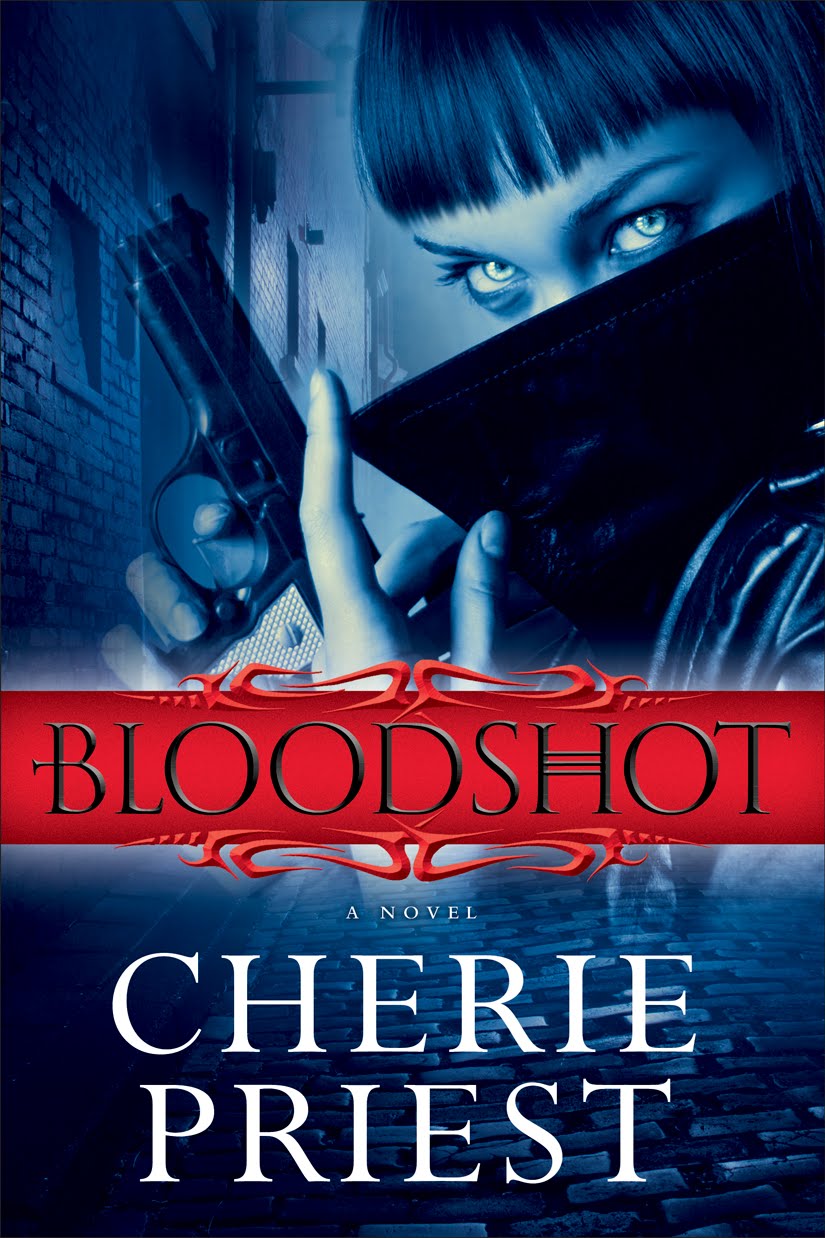
Hanna and I are off to Maine for a four-day weekend today and I thought I’d leave you with a little summer reading to pass the time. Last week, when the temperatures climbed passed 100 degrees fahrenheit here in Boston and we took refuge after work at the Prudential Center mall, Hanna bought me a copy of Cherie Priest’s Bloodshot, the first installment of a promising series called the Cheshire Red Reports.

This is my first Cherie Priest novel and you bet I’ll be going back for more. Bloodshot follows the adventures of a free-lance (thief? private investigator?) named Raylene who lives in Seattle and happens to be a vampire. Bored and ready for a challenge, Raylene accepts a job offered to her from a fellow vampire — even though he warns her it could be dangerous — and ends up with the feds on her tail and the lives of the few people she cares about at stake.

I was a particular fan of the character of Raylene, whose hard-boiled detective persona doesn’t feel overly forced. Priest managed to walk the fine line between making a female protagonist so matcho it hurts (and screams “fuck femininity and all it stands for!”) and making Raylene a vampire vamp. Raylene is also fallible and unreliable without falling into the trap of some other urban fantasy women (yes, Anita Blake, I’m thinking of you) of constantly seeking male attention or affirmation. I think she and Patricia Briggs’ Mercy Thompson would possibly get on well together. The other characters include Ian Stott, vampire, and his hipster ghoul Cal; Pepper and Dominique, two Baker Street Irregulars who squat in one of Raylene’s properties in exchange for their observation skills; and Adrian deJesus/Sister Rose an ex-military man turned drag queen. Most of whom look to be returning for installment two: Hellbent. So if you’re looking for some good summer reading, this one comes highly recommended. Particularly since, if you like it Cherie Priest has written lots more.

30 @ 30: chosen families [#3]

27 Wednesday Jul 2011

Posted by Anna Clutterbuck-Cook in life writing

≈ 2 Comments

Tags

thirty at thirty

What I’ve been trying to do in this series is reflect on the ways in which I have changed between “then” (my childhood and young adulthood) and “now” (at age thirty). Yet there are some aspects of my life that I think have maintained a strong consistency in terms of underlying values or inclinations. To some extent, I realize that we humans feel compelled to look back at our own autobiographies and seek continuity (thus the ever-popular emphasis on the innate nature of sexual orientation, which I’m going to tackle in a few weeks). However, our narratives of childhood development also often describe childhood as something of a foreign country, wholly different from the experience of being an adult. Obviously the truth lies somewhere murkily in between.

This post on chosen families explores the remarkable consistency of my own internal (not always entirely conscious) vision of what sort of family and community I long to be a part of as I grow up and grow older.

During the first year I was living in Boston (my first permanent move away from West Michigan), I had a particularly vivid dream. I don’t, as a general rule, have very exciting and/or deeply symbolic dreams. This one, however, I recalled with uncharacteristic clarity when I woke up. In the dream, I was a middle-aged woman with a teenaged son. I lived and worked in some sort of sprawling farmhouse doing some sort of social justice activism (the dream was unclear on exactly what, or I have forgotten). The dream centered around a dinner party at this house.

Maybe the house was something like this.
Lined with bookcases, obviously.

At the dinner table were myself and my son, a woman who in the dream was my closest friend from childhood, her children, the woman’s abusive husband — from whom she had come to my home to escape — and the father of my son, who had not been present in our lives for some years. Possibly since the child had been born.

Over the course of the dinner and the after-dinner mingling, a couple of important things happened. I told the abusive husband he was not welcome in my home if he intimidated his wife, and he left — leaving his wife and children to live with me. I also remember a conversation with the father of my child wherein it was clear we were on warm, companionable terms, but that he would not be staying with us or acting as a hands-on parent to the child we had brought into the world. In the dream, I was comfortable with that. What I remember more than anything else is the pride with which I presided over the home-space that was mine and served as a refuge for the people who came to stay with me, as long as they were kind to one another. Bullying behavior was not tolerated, and those who remained in the space were caring and supportive of one another. It didn’t matter that our made family was a household headed by two women (the implication was that my childhood friend — or possibly more than a “friend”? — would remain, with her children), with children at different life-stages and one father who would drift in and out of the home-space, both part of it and not entirely at home.

The dinner looked something like this.
Also imagine the final feast in “Mostly Martha”

Obviously this was just one dream, and its details make rather murky sense (if sense at all). I don’t read it as a portent of literal experiences to come. Yet part of why I took note of the dream at the time I had it was the way in which it fit in with a decades-long pattern of my imaginings in which my created family spaces are far from heteronormative.

As a child (say between ages of six and twelve), I wrote and told countless stories about chosen families. Some of these stories involved orphans banding together to establish a home. Some of these stories were more elaborate imaginings, proto-fan fiction if you will, in which I brought all of my favorite fictional characters together under one roof in a parallel world where we maintained a sprawling estate called Willowbanks. There were pairings within that parallel universe, and children conceived and birthed … but though in those days my conscious sexual pairings were all opposite-sex, just as important as the couplings were the same-sex intimate friendships and sibling bonds (I read a lot of British children’s literature that generally specializes in sibling groups … the Pevencies, the Walkers, the Blacketts, the Bastables, etc.). Ours was a world in which the adults all cooperatively parented the children and one was just as likely to fall asleep in the bed of an intimate female friend as with one’s husband.

As a teenager, I wrote fantasy novels. Long fantasy novels. In these novels, likewise, themes of sibling relationships, intimate female friendships, lovingly detailed descriptions of the home-spaces, and sprawling relationship networks dominated. I remember one particular saga (I wrote at least five novels in this universe) involved a pair of teenage protagonists, male and female (the girl was transparently me), who make their way into a fantasy world universe in which they have to save the heir to the throne blah blah blah your typical fantasy novel plot elements. What I spent the most time on, however, was describing in loving detail the time my two protagonists spent in the home of their mentor. She was a powerful mage who lived inside a gigantic living tree with a central staircase and rooms that moved and changed as needed. She lived alone, her husband having died in some magical battle (I forget the details), and was pregnant with their only child. The me-character was definitely as (if not more) interested in this mage than she was in her fellow protagonist whom I assumed the plot dictated her falling in love with. The mage, the two teenagers, the infant, and the mage’s relatives (who moved in and out of the story and the tree house) lived and supported one another as needed throughout the saga … and separation from the place and the group often meant intense agony for the characters involved.

Part of what has always drawn me to feminist and queer spaces has been the willingness of people in those spaces to question what constitutes a family. I’m not exactly sure where this interest in alternatives to the heteronormative family structure originates, since I come from (and thoroughly enjoyed being part of) a basically, well, heteronormative family. My dad was the full-time wage earner. My mother was the full-time parent. They’ve been married for over thirty-five years. I was the eldest of three kids and we lived in a home my parents bought just before they got married. Yet I’m going to go out on a limb here and argue that the way my parents chose to structure of family life (particularly as parents who chose to home educate their kids) actually encouraged me to seek out alternative structures. My childhood encouraged me to believe in the power of close sibling relationships and cross-generational relationships that weren’t necessarily dictated by hierarchical power dynamics. Our circle of close family friends included single adults, single-parent families, families with adopted children. We maintained a somewhat open-door policy when it came to folks moving in and out of our home, joining the core family members for dinner, etc.  (I mean this somewhat literally: I didn’t possess a house key until I was in my twenties because my parents never locked the door except when we went away on family vacations). Our household did have a clear sense of “parents” and “children,” with parents as care-takers and children as, well, children, who participated to the best of their abilities but were not expected to be adults.  Yet there was never the sense that in order to be a legitimate family, or a family that met the needs of every individual member, there had to be one father breadwinner, one mother caretakers, and children all with clearly delineated responsibilities. We kinda made it up as we went along, improvising as needs and abilities changed.

Which I think is why my (on the surface) heteronormative upbringing fostered openness in both my child-self and my adult-self to look beyond the expected structure of things and ask “what is the arrangement that would work well for all of the people involved here?” In fact, beyond a willingness to ask I’d say it was a nearly overwhelming impulse to come up with a circle of care that meets everyone’s needs — as long as they are willing to participate in the production and reproduction of that circle of care. (My mother would tell you this impulse to care was evident months after I was born and attempting to care for other infants our weekly playgroup.) The impulse recurs, resurfaces: in my childhood fantasies about the parallel universe of Willowbanks; in my adolescent fiction about magical families; in my subconscious dreamings about a future home in which all those who are willing to regard one another with lovingkindness are welcome.

multimedia monday: cambridge porn debate

25 Monday Jul 2011

Posted by Anna Clutterbuck-Cook in media

≈ Leave a comment

Tags

feminism, sexuality, web video

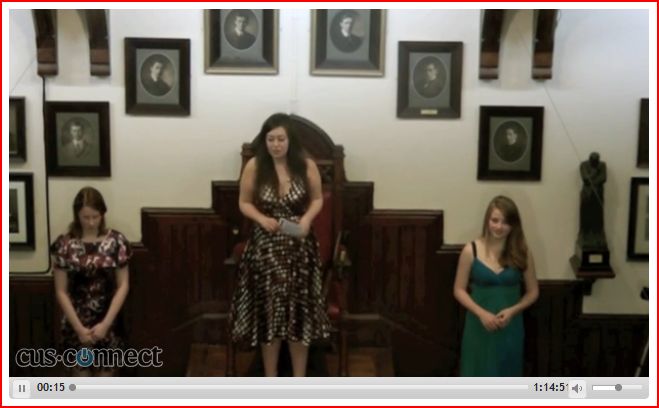
The author of one of the sexuality education blogs I follow, The Sexademic, was invited to Cambridge (England) to debate the pros and cons of pornography. Specifically: Does pornography perform a “good public service” yay or nay?

I would totally debate pornography in a room like this.

The full debate was recently made available by the Cambridge Union Society. You’ll have to click through the link for the actual video as it won’t let me embed (it’s over an hour long, too, so be forewarned!). If you can’t or don’t want to be bothered watching the whole thing, The Sexademic provides her own commentary on/synopsis of the event in a post written back in February before she realized the event would be made available online.

Again: Click through to the Cambridge Union Society for the full video.

in which I’m unexpectedly proud…

23 Saturday Jul 2011

Posted by Anna Clutterbuck-Cook in my historian hat

≈ 1 Comment

Tags

education, simmons, thesis

… to receive this in today’s post:

My work simply would not have been possible without the generosity of everyone who shared their oral histories and personal papers with me. Thank you, everyone! My work simply would not have been possible without the generosity of everyone who shared their oral histories and personal papers with me. Thank you, everyone! And I promise I will get over my bashfulness and post a link to the PDF of my thesis tomorrow over at the OE Oral History project blog.

UPDATE: Here is the post: how to live: the oregon extension as experiment in living, 1964–1980 [thesis]. A link to the PDF in DropBox can be found after the jump.

ficnotes: his awkward sod

22 Friday Jul 2011

Posted by Anna Clutterbuck-Cook in fandom

≈ Leave a comment

Tags

fanfic, gender and sexuality

These guys totally milk the fandom slash

It’s the return of the ficnote!

A week ago, I was at a house party with four other lovely ladies (five women + cat + peach basil ice cream: life is good!) where we spent a significant portion of the evening discussing the joys of fanfiction. And can I just say how wonderful it is to arrive at one’s thirtieth year and be reminded that growing up can be about owning one’s pleasures, not giving them up or shamefully hiding them because you believe others will think you foolish? I love being in the company of people who just enjoy being creative, and taking pleasure in others’ creativity, in such an omnivorous way. The beautiful thing about fan-created fiction and art is that it’s 99.999% amateur. People do it in their leisure time simply because they love it or because they have friends who beg for it.

Reading fan fiction, one of my favorite things is to see how people in such a diversity of situations and background interpret certain characters, pairings, or story lines, and how they engineer those elements to create stories where, more often than not, the main characters’ needs are being met in constructive ways. This spring, at one point, I observed that a certain fic involving Sherlock/John/Sarah was really a story about “a surfeit of needs being met.” While not every fic, obviously, is about successful relationships I actually think it’s fascinating to see how so much of fic is people working out what it takes to make a relationship successful … and the myriad answers to that question they come up with.

Enough nattering on: to the fic rec! This one is another I’ve nicked from Minerva @ Hypomnemata from a post she did on the fan fiction of Inspector Lewis. “Inspector Lewis” fanfic predominantly tackles the pairing of Detective Inspector Robert Lewis with his young second James Hathaway, a former candidate for the priesthood turned police detective. As the back story for Lewis involves a murdered wife and grown children, most fic authors have to negotiate in some way or another Lewis’s successful heterosexual relationship and (usually assumed) straight identity as the backdrop for his growing desire for Hathaway. Hathaway’s character, meanwhile, has a much more fluid sexual identity in the series, but is struggling with religious guilt over same-sex desires. There are also intimations of childhood sexual trauma in Hathaway’s past. Suffice to say, there’s a lot of really interesting stuff to work with — and a lot of potential for that fanfic staple hurt/comfort fic.  Sadly, I don’t think the majority of Lewis fic has plumbed the potential for Lewis’s self-examination as a middle-aged man with a hitherto straight identity who now finds himself in love with another man. Pairing Lewis’s positive (hetero)sexual experience with Hathaway’s more fraught sexual history could have some really interesting results … something that might eventually drive me to write a story arc of my own!

But in the meantime, I bring you a sweet little number that is one of my favorite pieces thus far discovered:

Title: His Awkward Sod
Author: Sarren
Pairing: Robert Lewis/James Hathaway
Author Rating: Explicit
Author Summary: “Lewis and Hathaway pretend to be a couple to catch a killer.”
Length: 1 part, 11,964 words
Available At: AO3.

Have fun, happy Friday, and you might be lucky enough to get another fic rec next week!

30 @ 30: body modification [#2]

20 Wednesday Jul 2011

Posted by Anna Clutterbuck-Cook in life writing

≈ Leave a comment

Tags

fun, the body, thirty at thirty

or possibly a fourth earring?

I thought after my post last week that took on the fairly weighty question of identity, I’d turn to something comparatively lighter this week and talk about body modification. Why? Well, it’s actually something about which my personal feelings have changed substantially over time … in that as a child and young teenager I was pretty categorically opposed to any bodily alteration, and today I find myself trying to decide where exactly my second tattoo should go, and whether or not a nose or nipple piercing is a wise investment.

Mostly, my youthful opposition to such things was a pretty simple matter: I was not a fan of pain. I was not anti-girly things as a child (though I insisted they went hand-in-hand with traditionally unfeminine things; more on that later). I was in love with my grandmother’s clip-on earring collection, for instance. But pierced ears sounded to me like the quintessential example of a bad time. Voluntarily allow someone to punch holes in your ears with a staple gun type thingy? I think not.

But the summer I was twelve this friend of mine visited from Canada, a fellow homeschooler from whom I learned a lot of worldly things. Such as what exactly a hickey was, and why it would be uncool to ask your mother what it was, or allow her to see that you’d received one from your boyfriend with the purple hair. Actually, the hickey-and-hair incident wouldn’t happen until we were a year or two older. The summer of 1994 we were thirteen years old and still spending our lazy afternoons reading through the vast canon of L. M. Montgomery and arguing over which of the young men in the cast of Swing Kids made our hearts flutter most fervently (I had a soft spot for Arvid myself). The point, though, is that my friend was, to my mind, a more worldly adolescent. While I was not entirely sure I wanted to be more worldly myself, I also knew I wished to impress upon her the fact I was not un-worldly.

Which is where pierced ears come in, insofar as she convinced me that to grow any older in our sophisticated day and age without pierced ears was simply not to be tolerated. And therefore, I screwed up my courage and we trouped down to a local jewelry shop to have the deed done. (The shop is still there on 8th street and still pierces ears, I saw the sign in the window when I was back in Holland last May). I wave brave, and it hurt less than I anticipated. Though I didn’t repeat the process until the summer of 2009 when, almost completely on a whim, Hanna and I went into a Claire’s in Downtown Crossing here in Boston and added to the collection (two more holes in my left ear, one additional one in the right). I can’t say I do a lot with them, since I can’t be bothered to change out the rings, but I do take pleasure in the fact that I’m a professional librarian with five ear piercings.

there will be a no. 2
I’m just not sure where, what or when

And now a tattoo. I’ll be upfront and say I harbored, for way too long, social prejudice against tattoos as something tacky and faintly unhygienic and frighteningly permanent. In my early twenties a friend of a friend got an ankle tattoo for her sixtieth birthday and I thought that maybe I could picture something like that … far into the future … when I had a better sense of who I was, and what I might want to say with ink worked into the very fabric of my skin. Maybe.

But in my mid-to-late thirties, my opposition started to melt. In part due to exposure to some exceptionally gorgeous ink on friends and acquaintances. I won’t lie: beautiful tats are much more visible here in Boston than they were in West Michigan. I see them on co-workers, professional colleagues, the coffee shop baristas, commuters on the T. When you see that much beautiful art around you, it’s hard not to start thinking, “If I ever … then I might …”.

I figured completing graduate school was as good a place as any to start. You can read all about why, what and how here.

Maybe I grew into myself faster than I used to imagine I would. Or perhaps I’m more comfortable with the notion that we are continually changing but that it’s okay if our bodies carry the scars of our previous selves: joyful and visible ones as well as painful and/or invisible ones. Chosen as well as involuntarily acquired. Human-created rather than physiologically made.

I’m still wary of body modification, in part because I’m just not that into pain and also because I try to be as accepting as I can be of my body as it is, rather than attempting through intervention to make it conform to my own (or to societal) expectations of how a body should be.

But ink, particularly, is something I’ve grown to believe can serve to celebrate the body as it is. After all, it draws attention to one’s physical presence, and insofar as it is a self-chosen form of visual symbolism communicates aspects of ourselves that go far beyond what we have been trained to assess when we visually assess our fellow human beings on the street. Tattoos demand that we be understood not just as bodies of a certain shape, skin color, weight. They also demand that we be understood as bodies. As physical presences that have been purposefully decorated in ways that are meaningful to the individual body in question. Tattoos are a way of tying our metaphysical, meaning-making selves to our corporeal, physical, taking-up-space selves. Much of their power, I would argue, comes from the fact that they are an art form that bridges that boundary between metaphysical and material being-in-the-world, and grounds that bridge-building in individual human flesh.

Not sure where I’ll be inking (or piercing) myself next, but you’ll likely hear about it on this blog. So stay tuned!

in which I write letters: dear netflix

19 Tuesday Jul 2011

Posted by Anna Clutterbuck-Cook in think pieces

≈ 1 Comment

Tags

call to participate, hanna, i write letters, movies, random ranting

Okay, so Hanna and I joined the tens of thousands of Netflix customers who expressed their displeasure at the planned price hikes for the popular DVD rental and online video streaming service, and particularly the way in which the company announced the price changes.  I’m not going to replicate the whole thing here, but I have thrown the letter into a PDF document so anyone who’s interested can read it and/or steal from it.

Mostly, I wanted to offer the contact details I was given by the customer service representative who answered the phone when I called the 1-800 number. Why did I use the telephone you ask? Because I’m apparently the only Netflix user on the planet who managed to discover and then forget that Netflix doesn’t like actually receiving meaningful customer feedback. Nowhere on their site do they have a form for communicating with them about any aspect of their services, nor do they have a customer service email through which to express positive or negative feedback about their company. Instead, I had to call on the phone and insist on obtaining a mailing address where I could direct the letter. I’m serious: the (very courteous) man whom I spoke to really really really wanted to take my feedback via telephone. I explained I already had it all written out and wanted to send it by email or mail thank you very much. He put me on hold and then finally said he’d been given “permission” to give me the corporate headquarters address to send the letter to.

I’m supposed to address it “Attn: Corporate.”

WTF.

they don’t get it either

I mean, even the Massachusetts Historical Society has someone who handles PR, right? We’re an organization of fifty employees! And you’re telling me that Netflix doesn’t have a Customer Service office staffed by people whose sole responsibility is to field incoming letters, emails, telephone calls, texts, tweets, Facebook messages, you name it?? I’m supposed to send my letter to corporate?

Excuse me while I pause to feel a little teeny tiny bit jerked around.


Anyway, here’s the address if you want to lodge a complaint:

Netflix
Attn: Corporate
100 Winchester Circle
Los Gatos, CA
95032

Or, apparently, you can use the popular method of leaving a message on their Facebook page.

← Older posts
Newer posts →
"the past is a wild party; check your preconceptions at the door." ~ Emma Donoghue

Recent Posts

  • medical update 11.11.22
  • medical update 6.4.22
  • medical update 1.16.2022
  • medical update 10.13.2021
  • medical update 8.17.2021

Archives

Categories

Creative Commons License

This work by Anna J. Clutterbuck-Cook is licensed under a Creative Commons Attribution 3.0 Unported License

Meta

  • Create account
  • Log in
  • Entries feed
  • Comments feed
  • WordPress.com

Create a free website or blog at WordPress.com.

  • Subscribe Subscribed
    • the feminist librarian
    • Join 37 other subscribers
    • Already have a WordPress.com account? Log in now.
    • the feminist librarian
    • Subscribe Subscribed
    • Sign up
    • Log in
    • Report this content
    • View site in Reader
    • Manage subscriptions
    • Collapse this bar