• anna j. clutterbuck-cook
  • contact
  • curriculum vitae
  • find me elsewhere
  • marilyn ross memorial book prize

the feminist librarian

the feminist librarian

Author Archives: Anna Clutterbuck-Cook

"autobiography is an exercise in self-forgiveness"; should it always be so?

07 Wednesday Jul 2010

Posted by Anna Clutterbuck-Cook in think pieces

≈ Leave a comment

Tags

books, politics, religion

One of our post-graduation presents for Hanna, one which I also get to enjoy the benefits of, was a subscription to the London Review of Books. The most recent issue includes a review of Christopher Hitchin’s latest book, Hitch 22, a memoir. Hitchins, like other public personalities who trade in sensationalism and putting other people down, is easy to dislike for his self-absorption and snobbery. When the memoir first came out, John Crace @ The Guardian crafted a “digested read” version that played on this propensity and had Hanna and I falling off our chairs with mirth.

I find I have written nothing of my wives, save that they are fortunate to have been married to me, and nothing of my emotional life. That is because I don’t have one. The only feeling I have is of being right, and that has been with me all my life. I would also like to point out that drinking half a bottle of scotch and a bottle of wine a day does not make me an alcoholic. I drink to make other people seem less tedious; something you might consider when reading this.

David Runciman, whose review of Hitch 22 has been made available at the LRB website, offers much the same analysis — though in much more analytical a tone. He observes that Hitchins appears to have cultivated the personality of a “political romantic, as described by early-twentieth-century author Carl Schmitt.

For Schmitt, political romantics are driven not by the quest for pseudo-religious certainty, but by the search for excitement, for the romance of what he calls “the occasion”. They want something, anything, to happen, so that they can feel themselves to be at the heart of things.

The problem with this, morally speaking, is that a romantic whose raison d’etre is not his ideals but “the occasion,” the question of values is irrelavent. Say what you will about the political idealist (and, living with an historian of Northern Irish nationalism I know there’s plenty to say!), at least someone who acts violently for the sake of their convictions is a person who is clear about where they stand. They are willing to claim allegiance to a set of values, and to work (at times to the death) to see those values put into action.

Now there are (to a person of my proclivities towards nonviolent political change) better and worse ways of trying to live out one’s beliefs. But I also believe there is some intrinsic value in having beliefs: in having enough self-awareness that you feel comfortable owning your beliefs, saying “this is where I stand and why.”

You might think that a person who has written, among others, a book titled Why God is Not Great is not shy about taking a personal stand, even a highly controversial one. But being provocative, rhetorically and otherwise, is not necessarily the same thing as being self-revelatory. One can speak highly-charged words while never allowing anyone to see the emotionally-complex human being behind those words. I find other peoples’ interior lives fascinating; my obsession with understanding how other people understand the world around them — how they make meaning of their lives — is what led me to history as a scholarly pursuit. Runciman’s argument about Hitchins, however, is that he has no interior life, or at least not one of which he himself is very aware or willing to share with his readers.

It certainly sounds like it has all been a lot of fun. His has been an enviable life: not just all the drink and the sex and the travel and the comradeship and the minor fame (surely the preferable kind), but also the endless round of excitements and controversies, the feuding and falling-out and grudge-bearing and score-settling, the chat-show put-downs, the dinner party walk-outs, the stand-up rows. Christopher Hitchens has clearly had a great time being Christopher Hitchens. But – and I don’t want to sound too po-faced about this – should anyone’s life be quite so much fun, especially when it is meant to be a kind of political life? Hitchens admits to some regrets, including that he has not been a better father to his children (and by implication a better husband to his wives, though he doesn’t actually say that), but he doesn’t seem to have agonised about it much. In fact, he doesn’t seem to have agonised much about anything. He doesn’t rationalise his political shifts so much as acquiesce in them: if it feels like he has no choice, then he has no choice but to follow his feelings. He has seen his fair share of misery and despair, and may have caused a certain amount of it himself, but it is entirely unclear what this has cost him.

I believe in extending compassion and possibly forgiveness towards oneself in equal measure as toward other human beings — being kind to yourself as you are kind to others is, truly, one of the ways in which we can make the world a more kind, generous, compassionate place. Yet when “autobiography is an exercise in self-forgiveness” (to borrow a phrase Runciman quotes toward the end of his essay) while the autobiographer neglects to extend all but highly conditional forgiveness to anyone else, such self-adoration seems a shallow, fragile thing indeed.

Go enjoy the rest of Runciman’s review, It’s Been a Lot of Fun, over at the London Review.

it’s 100 degrees in Boston today

06 Tuesday Jul 2010

Posted by Anna Clutterbuck-Cook in a sense of place

≈ Leave a comment

Tags

boston, domesticity, family

Visual via @MartinClinton for @BostonTweet on YFrog

Hanna and I have been debating all summer about whether or not to get an air conditioner for our bedroom. When the temps get above ninety and the humidity is high, the city holds the heat like nobody’s business and it’s so, so hard to sleep.

We’d just turned down the offer of a free a/c unit from my colleague and friend, Heather, in favor of fans and cold cloths — but this past weekend has done us in. And we’re going to borrow Heather’s window unit after work tonight, in hopes of actually being able to get a good night’s sleep.

Long-term, though, we have pretty serious concerns about the environmental effect of conventional air conditioning. I’ve been hunting around the web today, looking for some eco-friendly ways to get our bedroom down to sleep-friendly temps and humidity. I found a good essay on Green Living Tips that talks about some of the better options, but sadly a lot of the best include structural changes to buildings that, living in an rented apartment, we don’t have control over. I was also disappointed to see that Evaporative Air Conditioners are, apparently, super-effective in arid desert environments but counter-productive in humid places like Boston (built on marshland!)

Bah.

So maybe the long-term solution is to move to Central Oregon after all, where we could enjoy the benefits of that High Desert air!

Any of you had experience looking for more eco-friendly air cooling options?

terry eagleton on the secret lives of children

06 Tuesday Jul 2010

Posted by Anna Clutterbuck-Cook in book reviews

≈ Leave a comment

Tags

children, politics, religion

I recently picked up Terry Eagleton’s book On Evil (New Haven: Yale U.P., 2010). I might at some point write a fuller “booknote” about the volume, and a related Eagleton book, Holy Terror (2005), which I am also reading. However, in light of some of my recent posts on children as people, I thought some of my readers might enjoy the following passage from the first chapter of On Evil.

We are ready to believe all kinds of sinister things about children, since they seem like a half-alien race in our midst. Since they do not work, it is not clear what they are for. They do not have sex, although perhaps they are keeping quiet about this too. They have the uncanniness of things which resemble us in some ways but not in others. It is not hard to fantasize that they are collectively conspiring against us, in the manner of John Wyndham’s fable The Midwich Cuckoos. Because children are not fully part of the social game, they can be seen as innocent; but for just the same reason they can be regarded as the spawn of Satan (2).

Setting aside the question of whether or not what he’s describing vis a vis actual children holds true — and whether, if it does hold true, to what extent such a situation is culturally created or “natural” — I think it’s fascinating to consider how strong our cultural perception of its reality is: children are read uas “other,” whether in the Romantics innocent ur-human sense or in the sense of Golding’s barely-repressed savage, “uncivilized” amoral bestiality.

multimedia monday: the pre-roe politics of abortion

05 Monday Jul 2010

Posted by Anna Clutterbuck-Cook in media

≈ Leave a comment

Tags

feminism, history, web audio

Terry Gross and Linda Greenhouse @ Fresh Air | The Rhetoric That Shaped The Abortion Debate

To give you a taste, here’s Linda Greenhouse on the development of the rhetoric “the right to choose” and “pro-choice” for the advocates of abortion access:

Jimmye Kimmey was a young woman who was executive director of an organization called the Association for the Study of Abortion (ASA), which was one of the early reform groups and was migrating in the early 1970s from a position of reforming the existing abortion laws to the outright repeal of existing abortion laws, and she wrote a memorandum framing the issue of how the pro-repeal position should be described: ‘Right to life is short, catchy, composed of monosyllabic words — an important consideration in English. We need something comparable. Right to choose would seem to do the job. And … choice has to do with action, and it’s action that we’re concerned with.’

Introduction to book and full transcript of the show are available at the Fresh Air on website.

sunday smut: links on sex and gender (no. 28)

04 Sunday Jul 2010

Posted by Anna Clutterbuck-Cook in linkspam

≈ Leave a comment

Tags

gender and sexuality, sunday smut

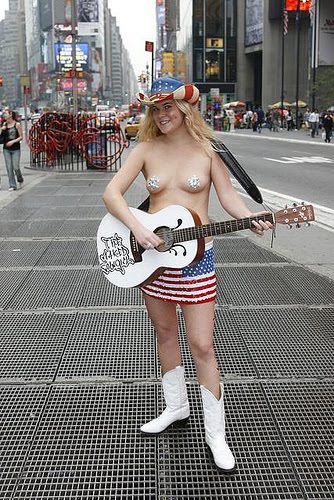
Because who could possibly resist gaudy patriotism like this on the 4th of July weekend? Not me!

In other, much more serious news (*ahem*), Amanda Hess & Courtney Stoker @ The Sexist talk about the highs and lows of being a feminist geek, and how to make dudely subcultures more inclusive, while Julia (also @ The Sexist) discusses how fanfic can serve as the gateway to kink (third video from the top).

The Youth and Media Policy Working Group Initiative @ Berkman Center for Internet and Society (Harvard University) offer up a paper (available in PDF) on “addresses legal and practical issues related to the practice colloquially known as sexting.” You can read a press release and download the paper at their website. I haven’t had a chance to peruse it, but it looks to be a good resource for folks doing research and/or advocacy in this area.

Thomas @ Yes Means Yes wrote a short post this week reminding us all that physical response to sexual stimulation does not equal consent: our bodies respond with arousal whether we desire the contact or not. What does this mean? Only enthusiastic participation can really equal consent, and that’s the golden standard we all need to be looking for in our partners.

Everyone, it seems, has opinions on whether women should breastfeed their children, for how long, under what circumstances, and the depths of “bad mother”-dome they will sink if they push the envelope on any of these parameters. Rowan Pelling @ The Telegraph (UK) describes the no-win situation

The last time I wrote on the topic, saying in the mildest terms that while I subscribed to the view that breast was best it was counter-productive to bully women on the topic, I received a torrent of abusive mail. Several people suggested that I should not have reproduced if I “couldn’t be bothered” to feed the baby myself, while one New Man denounced my laziness, saying piously that he had “made sure my wife persevered for our child’s good”. I had a vision of his poor spouse weeping with cracked nipples, while he chained her to the nursing chair.

Over @ first the egg, Molly shares her toddler’s expertise on childbirth, as well as he boundless curiousity for how babies are grown and birthed. “In the car later he was annoyed with himself because he knew that the cord provides food through the blood but couldn’t remember about oxygen: ‘What else does it do?,’ he asked urgently. Then he said he’d tell [his teacher] about the oxygen thing the next day. This child takes his duties as childbirth educator seriously, people.”

Endocrinologist Dr. Marian New is experimenting with the use of hormone therapy for pregnant women to reduce incidences of congenital adrenal hyperplasia(CAH) in female fetuses. CAH has been linked by some to a greater incidence of infertility, intersexuality, “masculine” behaviors, bisexuality, and even (gasp!) lesbianism. Kelsey Wallace @ Bitch Blogs feels this warrants the latest proclaimation of a douchebag decree for en utero gender norm enforcement! For those interested the more science-heavy details of New’s experimental treatments see: Alice Dreger, Ellen K. Feder, Anne Tamar-Mattis @ Bioethics Forum, Preventing Homosexuality (and Uppity Women) in the Womb? and an update by the same authors: Prenatal Dex.

In other drug-related news, the FDA recently declined to approve Flibanserin, a drug that is supposed to increase sexual desire in pre-menopausal women. While a number of feminists have vocally opposed the medicalization of sexual desire, Dr. Marty Klein @ Sexual Intelligence asks what is accomplished by denying the drug to women for whom a medical fix might improve their quality of life. “There’s something unseemly about activists — self-described feminists, sexual health advocates, whatever –working so hard to prevent a drug from coming to market because its creators might manipulate and confuse possible consumers.”

We might say we believe in gender equality, but do our values and our actions really reflect such a claim? As SarahMC @ The Pursuit of Harpyness, equality in theory but not in practice seems to be the order of the day according to a recently-released Pew Research survey of twenty-two nations worldwide.

Elena Kagan refused to backpedal her opposition to “don’t ask, don’t tell,” according to Michael Jones @ The Gay Rights Blog, and the always-worth-reading Dahlia Lithwick @ Slate offers her take on Kagan’s nomination process, reporting how senators worried that the Court might impose a Communist regime of forced vegetables for all if Kagan is approved, while Kagan herself woos her audience with her wit and wisdom as all the justices who’ve gone before her haunt the Senate floor. Which, in the end, turned out to be a poor tactic for the opposition, since most Americans are pretty happy with what Thurgood Marshall accomplished for civil rights.

In other Supreme Court-related news, SCOTUS handed down a ruling at the end of the 2009-2010 term supporting schools’ rights to require all school-endorsed student groups to be open to all. The specific case argued involved a law school that refused official recognition to a Christian student group because they required all members to sign a statement of faith upon joining, the articles of which included condemning non-straight sexuality as sinful.

Speaking of sinful behavior, Sinclair @ Sugarbutch Chronicles tackles the question of whether enjoying porn that features sexual orientations other than your own is exploitative. Short answer: No. Slightly longer answer: It’s not the consumption of pornography or erotica that is a measure of your exploitative behavior, it’s how you actually treat actual people whose sexual orientations and predilections differ from yours.

In other words: Let that erotica increase your reserve of lovingkindness toward all beings!

And with that, I’m going to sign off and go enjoy me some fireworks. Or maybe just an episode of two of American Dad!

Happy 4th everyone!

image credit: _MG_0880.JPG by DINO212 @ Flickr.com.

okay, it’s been a while since a really ranty post …

02 Friday Jul 2010

Posted by Anna Clutterbuck-Cook in think pieces

≈ 4 Comments

Tags

children, feminism, gender and sexuality, human rights

…but I’ve been sitting on this column by Hanna Rosin @ Slate for a while now and I just can’t get the anger out of my bloodstream. So I’m going to blog it out and see if that helps.

Oh, Ms. Rosin. If only you would quit writing stuff that makes me so mad! I really liked your work in God’s Harvard, I did, and although you glossed a bit too, well, glossily, over the non-fundie history of home education and emoted a little too strongly about the cherubic goodness of your subjects — despite the fact they’re happily growing up into the next generation of Dick Cheneys and Karl Roves — I was willing to forgive you the oversight. Write it off as the slightly rose-tinted view of a researcher who has grown close to, and thus a bit fond of, her subject. I mean, we’ve all been there, done that.

But you keep on writing shit about gender that pisses me off. In this case, your post up at Slate’s Double X blog about Dr. Poppa, the pediatric urologist at Cornell University who has been performing cosmetic surgery on babies whose clitorises are deemed “too large.” (See sunday smut no. 27 for my initial reaction.) Rosin is upset by the outrage in the blogosphere, which she believes focuses unduly on the sensational nature of Poppa’s research (“he touches six-year-old girls’ clits!”) and ignores the fact that the good Doctor is trying to reach what in her mind appears to be a positive goal: girls with clits that don’t look like penises (achieved through surgical reduction) and yet still retain the nerves necessary to give the patients sexual pleasure.

To his critics, however, these details [Poppa’s quest for a better clitoroplasty] don’t matter. [Dan] Savage calls this a conspiracy of “out and out homophobia.” He claims the medical establishment pushes these operations because girls with bigger clitorises are more likely to be lesbian. This claim is a stretch; girls with CAH are only slightly more likely to be lesbians or tomboyish when they are young. The vast majority are heterosexual and comfortable as girls. Gender norms have shifted pretty drastically in the 40 years that this operation has been performed, and still more than 95 percent of parents choose it for their children. Why? Because much as Savage might like it to be, the world is not yet a place where most little girls can have a clitoris that looks like a penis and feel entirely at ease. And few parents would want to use their daughter to test that proposition.

I just — I can’t — I’m floored by the the utter wrongness of this as a goal. Aside from the question of trying to regulate children’s sexual orientation and gender presentation (see the coverage of hormone treatments for potentially CAH babies as another, related example of how fearful we are of children who might possibly not conform: don’t try to tell me this isn’t about gender and sexuality policing), Rosin overlooks the fact that we’re talking about medical practitioners who perform potentially debilitating cosmetic surgery on infants.

It’s not that “details don’t matter” (excuse me??) The details fucking matter. The detail, for example, that decisions about what a “normal” clit looks like are aesthetic decisions, made by doctors influenced heavily by cultural norms (see Anne Faustos-Sterling’s Sexing the Body). The detail that this is not surgery the children need in order to be physically healthy or experience sexual pleasure. In fact, it jeopardizes their sexual pleasure so that their genitals will conform.

Now I realize, despite my own aversion to being cut open with sharp instruments, that some people are less freaked out by surgery than I am. And I realize that surgery saves lives. I also recognize the right of adults to alter their bodies, even when not medically necessary, to better suit their vision of how their bodies should look and feel — even if I would not make those same decisions. But children whose bodies are physically healthy should be allowed to grow up without surgical alteration until they are adults and have the cognitive and legal ability to make up their own freakin’ minds. By suggesting that parents who consent to altering their children’s bodies in this way — again: risking their child’s capacity for physical pleasure out of the desire that their bodies visually conform to the gender binary — are saving their children the possibility that their genitals might make them ill-at-ease, Rosin is leaning on mid-20th-century theories about psycho-sexual development (themselves highly homophobic) that suggested children were somehow irreparably damaged by any experience of ambiguity when it comes to their gender or sexual orientation.

Has she not stopped to ask herself whether, maybe, it’s adult fear of nonconformity, rather than young peoples, that is driving this need to surgically alter our children to erase the beautiful variation that is human existence? Isn’t it better to tell and show your child that you think her body beautiful than to make it clear — through imposing upon her painful surgical procedures and years of follow-up medical tests and treatments — that she is somehow not quite “right”? Isn’t it better to make your home a harbor from whatever toxic gender-enforcing messages are out there in the culture than to be the first to rigorously enforce those standards? What object-lesson are you teaching your child here: That it’s important to conform to arbitrary cultural standards no matter the cost? That one must sacrifice pleasure for the sake of superficial appearance? That to be a “girl” or a “woman” one must alter one’s body to fit cultural expectations of what it means to be feminine?

Above all, it sends the message that the person you are when you are born is not okay, that your physical body is not acceptable even if it is pain-free and carries you everywhere you want to go, and gives you pleasurable sensations, digests your food, thinks complex thoughts, learns new skills, experience a full range of emotion, and helps you explore the world with curiosity and joy.

Again, this is not meant to be anti-surgery in cases where surgery can demonstrably improve a patients life. But activists have been pointing out for years that it is beneficial to be patient and allow children to grow into their own sex and gender identities in the fullness of time, before limiting their options prematurely by surgical means.

Rosin’s critique of Poppa’s online critics makes it sound like we’re a bunch of irrational drama queens who are unable to think about children and sex in close textual proximity without losing the ability to reason. I really, really wish she would quit being so fearful that children not surgically modified will be unhappy with their genitals and start asking why we feel such a strong need to police peoples’ genitalia in the first place. If she’s really worried about these children who are going to grow up feeling awkward about their bodies (as an aside: isn’t that really just part of the human condition? who doesn’t feel awkward in their own skin sometimes?) shouldn’t she be using her platform as a nationally-recognized journalist to speak out more forcefully against the conditions that make them so?

There. Rant over. I’m now feeling a bit calmer. And will go home to enjoy the company of my partner, who often despairs at the amount of verbiage I am willing to generate in the name of feminism. Sorry, honey! I think it might be congenital. Maybe they have a surgery to correct it?

friday fun: my sister tells a story about street harassment

02 Friday Jul 2010

Posted by Anna Clutterbuck-Cook in media

≈ Leave a comment

Tags

blogging, family, feminism, web video

As @feministhulk observed this week, HULK TRY TO OPEN MIND, SMASH EPISTEMOLOGICAL FRAMEWORKS WHICH LIMIT HULK’S THOUGHT, BUT HULK WILL NEVER GET CAT-CALLING.

My sister, Maggie recently moved to Austin, Texas and started a personal blog to share pictures and videos with family members. Last week, she posted this story about two guys who harassed her at a local mall, trying to recruit her (they claimed) for a modeling agency.

Since Maggie is a great storyteller I mostly want to let this story stand on its own and let you make of it what you will.

I do want, briefly, to say this. What struck me when I watched the video is how important it is to remember that sexism and beauty standards end up hurting even the women who are supposedly privileged by them. In this situation, because Maggie’s harassers thought she looked “like a model,” they felt entitled to proposition her in the coffee shop at the mall. This is a different type of harassment, to be sure, than the ridicule we who don’t fit the norm experience. It’s easy (because women are encouraged to compete with each other when it comes to beauty) to resent the attention “hot” women receive from strangers. But those women I know who experience that attention usually don’t feel more than passingly gratified. Mostly, they feel under constant siege from people who act like their bodies are somehow public property, perpetually on show, simply because these women had the gall to walk out of the house in the morning in something other than their pajamas (and at times even then!).

My sister has learned how to reject these intrusions and even turn them into humor. She’s in a position to recognize the harassment for what it is and protect herself. But, as she points out some young women might not be so critical of the harassment disguising itself as flattery. Which is why raising awareness of the fact that this kind of harassment is not okay — particularly through humorous means such as the collaborative Hollaback! website — are such awesome resources. Make sure all the people in your life who experience this kind of public harassment know there are ways to speak up and fight back.

“a rash and dreadful act for a woman”: the 1915 woman suffrage parade in Boston

01 Thursday Jul 2010

Posted by Anna Clutterbuck-Cook in my historian hat

≈ Leave a comment

Tags

feminism, history, MHS


A couple of weeks ago I promised to share with all of you the July “object of the month” from the Massachusetts Historical Society, which I selected and wrote the text for. And today it goes live! The item, to refresh your memory, is a 1915 leaflet containing instructions to participants in the October 16 woman suffrage parade held here in Boston. To be entirely self-referential and quote from my own description,

In 1915, male voters in Massachusetts were asked to decide on an amendment to the Massachusetts Constitution that would strike the word “male” from the article that gave men the right to vote. In response to the upcoming vote, the Massachusetts Woman Suffrage Association organized a pro-suffrage parade on Saturday, 16 October 1915, involving some 15,000 marchers and 30 bands. The parade route began at the corner of Massachusetts Avenue and Beacon Street; marchers made their way past the Public Garden, Boston Common, and the State House before proceeding up Tremont Street and Saint James Avenue to Huntington. The parade ended at Mechanics Hall where a pro-suffrage rally was held.

You can see the digital version of the broadside and my accompanying text over at the Massachusetts Historical society website.

image credit: Suffrage parade, New York City, 6 May 1912, made available at Wikimedia Commons; image is in the public domain.

espresso AND a puppy: the consequences of free-range children?

30 Wednesday Jun 2010

Posted by Anna Clutterbuck-Cook in media

≈ 3 Comments

Tags

children, humor, politics

Via my friend Laura comes this warning from a coffee shop in L.A., posted online at The Consumerist.


I’m going to admit up front I find this funny. I think it’s a fairly light-hearted way to ask parents to be aware of their children in public, crowded spaces. And remind them not to assume that baristas and/or store clerks and/or other customers are available for free childcare. As a person who used to work at Barnes & Noble, I’ve experienced first-hand the frustration of adults who came in with the clear intention of dumping their kids in the children’s area and then going to meet their friends for an extended coffee klatch at the Starbucks across the store. It’s one thing to believe that “it takes a village to raise a child” (I do believe young people are our collective responsibility) and another thing to demand that “the village” suddenly add childcare to their list of work-related responsibilities.

There’s a big difference between asking a barista to politely take an order for chocolate milk from a three-year-old and asking them to supervise a gaggle of small people roughousing on the coffeehouse furniture. As Laura said to me in a follow-up email,

Whenever people ask me to take care of their children, I try to make it clear that they may not like the results. After thinking through this child-hate controversy for a long time (via your blog and elsewhere), I have come up with [the point that] us haters don’t actually hate children, we hate the parents. The parents who don’t respect their children or other people enough to to teach/guide/discipline their children within responsible boundaries. My own personal experience with this is primarily in stores and on the T [Boston subway], both places where it can be dangerous not to monitor children. Plus, I think most everyone could do with a teaching moment on respect, politeness, and kindness, and I think it’s a real problem that some parents think their children can’t learn it, or it will be stifling to their creative spirit to learn it. I mean, children are smart, you can teach them appropriateness in different circumstances.

To go back to the episode of My Family I wrote about for mother’s day, when Ben and Susan (the parents) are trying to speak with another couple about that couple’s son’s bullying behavior toward Ben and Susan’s youngest child. The parents of the bully are self-proclaimed advocates of “free range” children, which in their minds equates to being completely hands-off and allowing their child to run rough-shod over other young people. I have first-hand experience with this kind of parenting philosophy, which basically assumes that children should work out problems among themselves. What I find suspicious about this philosophy is that a) the parents espousing it are more often then not the parents of children who benefit from the playground hierarchy, rather than parents of victims; and b) it side-steps the question of how children are going to learn — particularly in a culture that’s so age-segregated as ours, where children spend the majority of their time with their age-mates — the skills to mediate and problem-solve. These are skills even adults with years of practice struggle with, and yet we assume children will magically acquire them?

I sense a disconnect.

Which is why I come back to observation “a”: radically hands-off parents* are more often than not bullies themselves, advantage-takers who are more than willing to step over others more vulnerable then themselves (whether it’s a polite stranger they cut in front of in the coffee line, or a colleague at work they systematically undermine, or a spouse whom they bully Hyacinthe style). They believe the world is a cut-throat, take-no-prisoners place in which their children will need to learn how to come out on top if they are to survive.

I realize I’ve wandered far away from “espresso and a puppy” here. I think what’s fascinating to me about the question of attended/unattended children in public spaces (and the related question of what type of “attending” said children require) is that rarely do we stop to assess what the stakeholders in the situation really need and how we might best arrange our public spaces in order to accommodate those needs. And I use the rather social-sciencey term “stakeholder” here as an umbrella term that encompasses all people involved: coffee shop employees, customers with children, customers without children, customers who are children … how often do we stop and ask, when there is a perception of a problem (i.e. unattended children) what the actual problem is, and how it might be fixed. It’s a possibility that rowdy, neglected children are symptomatic of something deeper, and that requiring children to be “attended” won’t necessarily fix that issue — which will manifest in some other way down the road.

Still, points to the sign-creators for naming the symptom at least — if not the cure. And doing it in a fairly benign fashion at that, with a clear sense of humor. I particularly appreciate that the consequences of the percieved problem, in this case, are couched in terms of consequences for the parents (your kid’s gonna learn the word “fuck”! and acquire a taste for coffee!) rather than abuse toward the children themselves, who are still learning, growing, and practicing what it means to be part of the social fabric of the world.

*Again, to be distinguished from parents who respect their children as human beings and care for them with unconditional love, something that is often also referred to as “free range parenting.” That’s a post for another day.

"time trickles down, and i’m breathing for two"

29 Tuesday Jun 2010

Posted by Anna Clutterbuck-Cook in our family

≈ 4 Comments

Tags

domesticity, hanna, holidays

So Hanna and I — like lots of couples, I imagine — don’t (yet) have any sort of definitive anniversary date on which to celebrate the miraculous grace of being together. Depending on which version of the story gets told (aren’t there always competing narratives?) we’ve been together anywhere from one to three years, give or take.

The awesome thing about this, Hanna informs me, is that it means we get to pick at least two dates on which to take special note of this thing we have going together. And — according to my version of the story at least! — today is one of them. So hooray! Let’s celebrate!

Thing is, neither of us is all that good a celebrating milestones like this, so rather than do anything super-duper splashy I thought I’d make a list. I’m good at lists! Hanna is also good at lists. We enjoy making lists together, in fact. So here’s my list for today, which is a list of all the beautiful, funny, wicked, delicious, true things in the world I would not know about (or know far less about) if Hanna hadn’t walked into my life.

Allston, Mass., which we now call home.
Boston Common Coffee Co., the first place we ever had coffee together (we talked for six hours — I really ought to have known then).
Catherine Tate, aka Donna Noble.
Dear Agony (Breaking Benjamin).
Walking on the Charles River Esplanade (much more fun with two).
FIFA World Cup Football (and why the UK England lost even though it was a tie).
The importance of having green things in one’s home.
Holding hands (way more intoxicating than I could have imagined).
Ice cream that comes in monthly flavors!
Joe Hill.
Kisses (also Kiss Kiss Bang Bang).
Let the Right One In.
Metta meditation.
The Ninth Doctor.
The Ood.
The Peabody-Essex Museum.
Quotations (and Quality snark) for every occasion.
Irish republican nationalism.
The Super 88, where we had dinner the night I decided to move in.
Terry Eagleton who introduced us to the ever-useful term “Ditchkins.”
Underwater Light (best Harry Potter fanfic ever, sadly no longer available on the internets).
Vampires who do not sparkle
Waving not drowning.
Always vote X saxon if you know what’s best for you.
Yoga practice.
Zombies (along with Christopher Eccleston, who might be scarier than zombies).

Thank you, love, for all of this. And let’s keep making lists together for years to come.

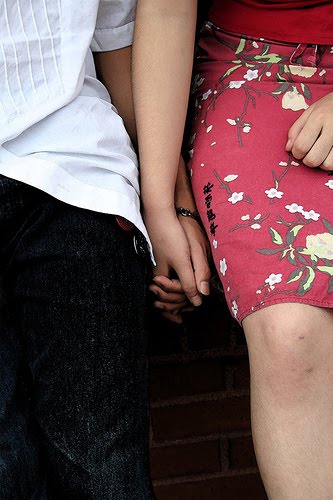
image credit: lesbian romance by made underground @ Flickr.com

← Older posts
Newer posts →
"the past is a wild party; check your preconceptions at the door." ~ Emma Donoghue

Recent Posts

  • medical update 11.11.22
  • medical update 6.4.22
  • medical update 1.16.2022
  • medical update 10.13.2021
  • medical update 8.17.2021

Archives

Categories

Creative Commons License

This work by Anna J. Clutterbuck-Cook is licensed under a Creative Commons Attribution 3.0 Unported License

Meta

  • Register
  • Log in
  • Entries feed
  • Comments feed
  • WordPress.com

Blog at WordPress.com.

  • Follow Following
    • the feminist librarian
    • Join 36 other followers
    • Already have a WordPress.com account? Log in now.
    • the feminist librarian
    • Customize
    • Follow Following
    • Sign up
    • Log in
    • Report this content
    • View site in Reader
    • Manage subscriptions
    • Collapse this bar