• anna j. clutterbuck-cook
  • contact
  • curriculum vitae
  • find me elsewhere
  • marilyn ross memorial book prize

the feminist librarian

the feminist librarian

Author Archives: Anna Clutterbuck-Cook

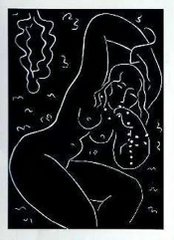
sunday smut: links list on sex and gender (no. 1)

29 Sunday Nov 2009

Posted by Anna Clutterbuck-Cook in linkspam

≈ Leave a comment

Tags

gender and exuality, sunday smut

So I’ve decided to give in to my pleasure at perusing all things human sexuality and gender identity related in my blog feeds and try setting aside my Sunday post for highlighting my favorite links of the week on those topics. We’ll see how it goes!

This week, I found myself following with bemusement the story of a straight couple in the UK who applied for a civil union, only to be denied on the basis that the law explicitly excludes opposite-sex couples. As Hanna said, what sort of dumb-ass bureaucrat said to themselves, “Aha! I know what I’ll do! I’ll redress discrimination in one set of laws by writing legislation that discriminates in the opposite way!”

JoAnn Wypijewski, of The Nation wrote a column back in September about the trend of medicating human sexuality that is perceived as abnormal — specifically about the newly-imagined disorder known as “female sexual dysfunction.” I recognize that hormones and other physiological factors do play a major role in our sexual lives and pleasures, but I also think her observations are worth considering:

“So many times I don’t think sex is a matter of health,” Dr. Leonore Tiefer, a sex therapist and founder of the New View Campaign to challenge the medicalization of sex, told me the other day. “I think it’s more like dancing or cooking. Yes, you do it with your body. You dance with your body, too. That doesn’t mean there’s a department of dance in the medical school. You don’t go to the doctor to learn to dance. And in dancing school the waltz class is no more normal than the samba class.”

Greta Christina, at the Blowfish Blog, has some “harebrained speculations” about why, if sexual orientation is rooted in biology, there are so few people who identify as bisexual.

For some reason, I find the amount of disgust leveled at Levi Johnston for his Playgirl shoot utterly dispiriting. Sure, I find Palin’s bid for the vice-presidency and the way the family exploited Bristol Palin and Levi Johnston’s pregnancy deeply problematic. I also find it tacky that Johnston is exploiting the media attention by posing in a nudie magazine. But that is absolutely no excuse for anyone to pile hate upon him for not being their ideal object of desire. None. If you think what he did was wrong for any reason other than that you don’t like how he looks, say so. If you don’t like how he looks don’t fucking look. It’s that simple, people.

And finally, a word of advice: “These are the names of tulips. Let us allow them to remain the names of tulips.” In the wake of the bad sex award shortlist release, and the inevitable discussion over what makes “bad” and “good” sex writing, avflox at BlogHer shares a few tips on writing sex.

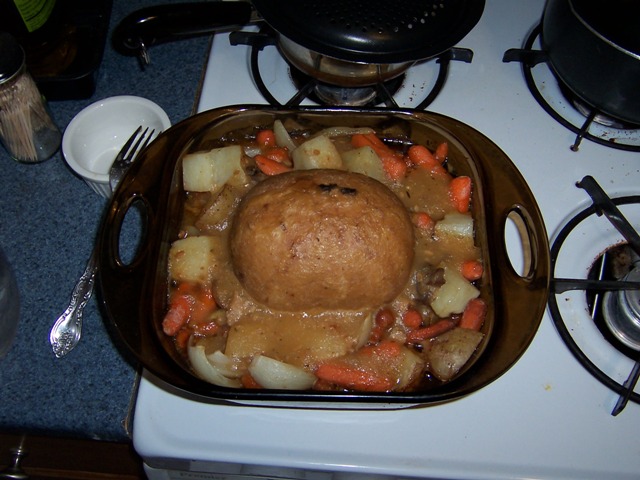
from the neighborhood: tofurky in three acts

28 Saturday Nov 2009

Posted by Anna Clutterbuck-Cook in our family

≈ Leave a comment

Tags

boston, domesticity, from the neighborhood, photos

Act I: Preparation


Act II: Contemplation


Act III: Devour!

links list: audio-video edition

27 Friday Nov 2009

Posted by Anna Clutterbuck-Cook in linkspam

≈ Leave a comment

Tags

web audio, web video

Last Monday, I spent seven hours at Northeastern entering metadata (“information about information”) into the Greenstone database for my scrapbook digitization project. Since this only really required the left side of my brain, I entertained the right side of my brain by listening to podcasts, NPR programming, and other miscellaneous audio programs. Here’s some of what I listened to.

I started out with the latest podcast from RhRealityCheck (25 minutes), which included a interesting interview with author Laura Scott, who is doing a survey/book/documentary project about couples who remain “childless by choice.” As Hanna remarked, do we really need a whole website to support the decision not to have kids? But she had some thoughtful observations and thankfully did not come across as defensive or hateful of children, which in my experience many people who identify themselves as “childfree” or “childless by choice” do — especially in the anonymous spaces of the internet.

Then came the week’s episode on Wait! Wait! Don’t Tell Me which included a great riff by the panelists on the new Twilight movie, New Moon, out in theatres this week: Who’s Carl This Time? (9 minutes)

From On the Media’s November 20 show came Online and Isolated?
(7 minutes, transcript after the jump):

Social scientists have long suspected that the internet contributes to our growing isolation. But Lee Rainie, director of the Pew Internet and American Life Project, set out to test that assumption. He says they found that Americans aren’t as isolated as we thought and that being active on the internet might actually help prevent social isolation.

On September 23, Terry Gross interviewed author David Weigel @ Fresh Air (40 minutes)

Is the conservative right undergoing a transformation? Journalist David Weigel thinks so. Weigel covers the Republican party for the online magazine The Washington Independent, where he’s written about tea party protests, anti-health care activists, the “birther” movement and the recent Values Voter summit.

Weigel formerly covered national politics for the libertarian magazine Reason. He’s also written for Slate, Time.com and The Nation.

And finally, writer Lenore Skenazy @ Free-Range Kids posted a lecture on free-range parenting she gave at Yale University’s Zigler Center. Skenazy talks about the insane levels of parental fear about letting children explore the world (1 hour video).

*image credit: valu thrift headphones by Thrift Store Addict @ Flickr.

have a restful thanksgiving

26 Thursday Nov 2009

Posted by Anna Clutterbuck-Cook in our family

≈ Leave a comment

Tags

addie, family, holidays, michigan, photos


Hanna and I are planning to enjoy the day sans things academical and plus Charles Shaw merlot and a Tofurky roast from our local Trader Joe’s.

Bonus Radical Feminist Link: Women Postpone Thanksgiving Dinner to Meet Militant Feminist! a 1909 news story via Sociological Images.

booknotes: hunting ground

25 Wednesday Nov 2009

Posted by Anna Clutterbuck-Cook in book reviews

≈ Leave a comment

Tags

genre fiction

I find it difficult to read new fiction during the semester, and tend (if I have the time), to revisit old favorites rather than branch out in new direction . . . even new directions that take little intellectual or emotional effort. But this passed week, Patricia Brigg’s new installment in the Alpha & Omega series (werewolves; modern American West), Hunting Ground, so in the spirit of Hanna’s recent five-minute book reviews, I thought I’d offer a couple of reflections.

Warning: Mild plot spoilers for those who care.

So the Alpha and Omega series started out in a short story from a mass market paperback collection of supernatural romance stories, On The Prowl. Anna (cringe) is a recently-turned werewolf living in Chicago whose pack has been exploiting her. When the Marrok (head werewolf of North America) sends his son Charles to deal with the problem, Charles and Anna have a love-at-first-sight supernatural bonding thing and she ends up leaving Chicago and moving back to Montana with Charles to become part of his pack and (eventually, in the first novel-length book) his mate. So that’s the basic set-up.

While the first short story worked, I was disappointed with the first novel, Cry Wolf, since it felt like a long drawn-out love-at-first-sight-slash-recovery-from-sexual-abuse-via-sex plot (sans any satisfying sex, so what’s the point, really?). But I was willing to hang in there for the sake of the interconnected series, so when the second one came out this fall I put it on my reserve queue at the library.

And I’m happy to report that some improvement was made. Having gotten Charles and Anna together at the end of the first novel, we’ve moved on (mostly) from romantic angst to supernatural international political negotiation: the werewolves in the U.S. have decided to go public and some packs elsewhere in the world aren’t happy about it, so Bran, the Marrok, invites them for a diplomatic summit, held in Seattle, sending Anna and Charles as his delegates. Supernatural shenanigans and power-struggles ensue.

Things I’m pleased about:

Anna is developing a backbone, aided, in part, but her particular werewolf powers, which entail being somewhat outside of the normal pack structure and able to stand up to the Alpha wolves (she describes this at one point as being a “zen wolf” which I thought was kinda funny).

Briggs shifted the focus of the plot in this second book from Anna and Charles relationship to the political negotiations, which was a good decision. I’m not against relationships and sex — it’s okay to have both in the story, and in the Mercy Thompson series her ongoing negotiations with the guy she ends up involved with are a fun sub-plot/parallel-plot. But they are never THE plot, which they were in Cry Wolf. So side-lining them while simultaneously giving Anna a more active role in the relationship (as opposed to being the traumatized partner) was a good move.

Setting it in Seattle was fun — I like my urban fantasy out West, which is possibly just personal bias since I enjoy the landscape of the Pacific Northwest so much myself. And the coastal setting works in her favor in this instance.

Things not-so-pleasing:

Why does Briggs have to go and sexually traumatize her heroines before getting them connected with men (all her main female characters have so far been straight) who support their independence? Sexual trauma is less a feature of Mercy Thompson’s character as it is Anna’s, since she is raped in one of the later books when her character is pretty well-formed. With Anna, her history of sexual abuse at the hands of her first werewolf pack threatens to overwhelm other aspects of her character. I also resent the implication that for women trauma = sexual abuse. While obviously not minimizing (for women or men both) the violation that is sexual violence, I’d suggest there are other ways to signal “damaged female character” than have them be a survivor of rape.

Unsatisfying sex scenes. If you’re going to write sex scene that aren’t “off screen,” then have the guts to finish what you started. I felt like Briggs, in a couple of instances, was ramping up to a nice sweaty, satisfying bout of on-screen sex only to cut it off abruptly and imply that a “good time was had by all” without actually giving us details. It was weird. In my book, if you’re going to skirt around the sex by using that sort of maneuver, it’s best not to begin the scene as if you’re going to follow through.

On the whole, I’d say this is a middling-to-solid continuation of the series. So far still enjoy Mercy Thompson more as a heroine (begin with Moon Called), and hope to see a fifth installment in the near future. But if another Alpha and Omega book comes out, I’ll likely pick it up as well to see if she can build on the gains made in this one.

Related: My earlier reflections on Booknotes: Bone Crossed, the last Mercy Thompson novel.

On the Syllabus: The Great Crusade and After

24 Tuesday Nov 2009

Posted by Anna Clutterbuck-Cook in my historian hat

≈ Leave a comment

Tags

feminism, history, simmons

A few weeks ago, I posted an excerpt from Charles and Mary Beard’s The Rise of American Civilization on the women’s struggle for suffrage and the passage of the 19th amendment. Below is another version of this same story, offered in the twelfth volume of A History of American Life, a formidable accounting of American history edited by Arthur M. Schlesinger. This volume, The Great Crusade and After, 1914-1928, was written by Preston William Slosson and first appeared in 1930. In the section “Woman Wins Equality,” Slosson writes of female suffrage

The Nineteenth Amendment which extended the political franchise to American women, already emancipated in everything save politics, followed about half a year after the Eighteenth, prohibiting the sale of alcoholic liquors. The twin amendments–twin victories for feminism some would say–had much in common. Both prohibition and woman suffrage had roots deep in American history and represented a final triumph obtained after almost a century of continuous agitation. Both were attempted in many places on a state-wide scale before they forced their way to the front as national issues. Both were first mooted by Puritan reformed in Northeastern states, when actually carried into effect by their radical sons who had moved to the Western plains and mountains, and opposed almost to the last ditch by their conservative grandsons who had stayed in the East. (157)

Several things strike me about this framing of the 19th Amendment. Much like the Beards, Slosson writes of suffrage as the culmination of a century-long struggle of women for “equality,” possibly going even further than the Beards by explicitly describing enfranchisement as the last barrier to women who were “already emancipated in everything save politics.” Pairing the 19th Amendment with Prohibition places women’s suffrage rights in the context of nineteenth-century social reform movements. He is not wrong in making the case that Prohibition was seen, in many circles, as a victory for women generally and feminist activists particularly, since the evils of liquor were often characterized by prohibition activists as adversely affecting women and children by encouraging men to spend wages on drink and neglect their families in favor of the homosocial (largely-male) world of pubs and clubs where alcohol was served.

A few pages later, Slosson goes on to describe how the suffrage campaign was ultimately won, highlighting what he sees as “the almost complete absence of ‘militancy'” in the American campaign as opposed to the British.

In England a fairly large radical wing of the suffrage movement had tried to badger the government of the day into action by such means as broken windows, interrupting public meetings, destroying mailboxes, and other ‘nuisance tactics.’ Nothing so extreme occurred in the United States, the nearest approach to it perhaps being the picketing of the White House with banners denouncing President Wilson (himself already a convert to the cause) for not putting more pressure on Congress . . . Even this very mild form of militancy was frowned upon by the majority of American suffragists, who used no method except political organization and open discussion. Their speedy success seems to have been due in part to the skill of their political managers, in part to the chivalric tradition in American life which made it difficult to refuse any really sustained demand by women . . . and in part as a tribute to the indispensable services of American women during the World War. (160)

It is notable here that Slosson fails to mention that even the “very mild” tactic of picketing the White House led to the imprisonment of a number of suffrage activists, hunger strikes, and force feedings (see for example Doris Stevens’ account Jailed for Freedom). I also think it’s fascinating to see how he opposes militancy with “political organization and open discussion” in a way that not only favors the latter, but also implies that it was more feminine (appealing to the “chivalric tradition in American life”). I think a number of women activists would at the time have taken umbrage at the notion that one hundred years of agitation equaled “speedy success.” Many of the women who were among the first generation of modern women’s rights activists were no longer alive when the 19th Amendment became federal law. For them, the success was far from speedy: it was, in essence, non-existent.

Quick Hit: Launching ‘Paper Not Included’ Blog

23 Monday Nov 2009

Posted by Anna Clutterbuck-Cook in linkspam

≈ Leave a comment

Tags

blogging, books, hanna, in love with new blogs

Today is the official launch date for Paper Not Included a new group blog that Hanna, along with four other bloggers, will be contributing to. They plan to blog about books and reading with a particular emphasis on new ebook technologies and their effect on books and reading culture. Add them to your blog reader of choice and see what they have to say!

nanowrimo: week three update

22 Sunday Nov 2009

Posted by Anna Clutterbuck-Cook in fandom

≈ Leave a comment

Tags

blogging, fanfic, fun

I had fun this week customizing the NaNoWriMo word count widgets to show my progress as a percentage of my own personal goal (30k words, or 1,000 words per day on average) rather than as a percentage of the national contest goal (50k).

Who knows, if I have some leisure time over the Thanksgiving holiday weekend, after writing my final independent study paper and my wiki presentation for Collective Memory, I might sprint to the finish line and submit my word count to be verified as a winner afterall. But possibly not this year.

Meanwhile it’s back to the writing!

links list: the mostly sex and gender edition

21 Saturday Nov 2009

Posted by Anna Clutterbuck-Cook in linkspam

≈ Leave a comment

Tags

feminism, gender and sexuality

I have a couple of short “on the syllabus” posts in the works, but somehow the books I’m writing up never seem to be the books I have with me when I sit down at a computer with some time to put together a blog post. So those’ll have to wait for tomorrow’s day of catching-up (fingers crossed they get the power in our apartment back on, or they’ll have to wait a little longer!)

In the meantime, here are some links from the week’s feeds.


Haute Macabre offers us silence in the library, a fashion spread set among cobweb-swathed bookshelves (and I was so proud of myself for getting the post title reference!)

The web comic sad pictures for children asks do you feel happy or insane?

I’m really hoping we get to see the Tim Burton retrospective at MOMA before it closes next April.

CarnalNation highlighted the results of a (totally unscientific) British sex survey done by London’s Time Out magazine which I found a strangely fascinating read. They questions and multiple-choice options are inherently flawed, but some of the comments were fun and the Time Out editors who pulled the results together clearly weren’t taking the endeavor that seriously.

In Common Claims, posted at the National Sexuality Research Center, historian Sharon Block suggests similarities between Early American discourses about sexual assault and the media coverage of Roman Polanski’s recent arrest.

Similarly, in “Gay Priests? No, Confused Priests” Marty Klein writes at Sexual Intelligence about researchers at New York’s John Jay College of Criminal Justice who are looking into the causes of sexual abuse in the catholic church.

Courtney at Feministing posted a round-up of responses to an earlier column she wrote about feminism and masculinity.

Hadley Freeman asks “do lesbians rule Hollywood?” (if so I never got the memo and I’m wondering where I sign up for my percent of the royalties!) Somewhat puzzling, but still a fun read.

In the same vein, Kelsey Wallace over at Bitch Magazine reports that acording to Marcus Buckingham of the Huffington Post the gender wars are over and women won! (it was a war? and we did? why does no one ever tell me these things??!?)

The shortlist for the bad sex awards has been announced (Philip Roth wins particular notice for claiming in the text of his sex scene that he is not writing “soft porn.” Dude. If you’re going to write a sex scene, don’t get all squamish about it in public! Although frustratingly enough he’s right: it’s not soft porn, it’s excruciatingly bad porn.)

The bad sex scene shortlist prompted Sarah Duncan at the Guardian to ask “where’s the good sex in fiction?“

While we’re on the subject of bad sex in fiction, Hanna forwarded me this I-choked-on-my-cocoa hilarious review of the second Twilight movie, which hit theaters this week. It’s tough picking my favorite passage, but I think it might just be:

Bella gets dumped by Edward (for her own safety, naturally), and spends thirty minutes grieving via night fits normally seen in three-year-olds. Edward’s spirit appears at random intervals to scold her like she actually is one. Jacob wants her to be his girlfriend—except it’s too dangerous—except she’d better not go back to Edward Cullen or else.

Can we all say Wuthering Heights 2.0? It’s only a matter of time before baby Renesme (yes, that really is the baby’s name) gets dangled from the second floor balcony of the Grange.

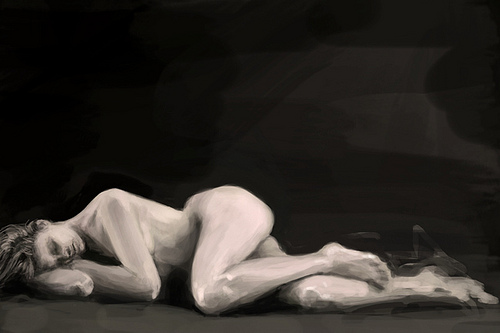
*image credit: iphone brushes life drawing by Quaxx @ Flickr.

putting the breaks on school insanity?

18 Wednesday Nov 2009

Posted by Anna Clutterbuck-Cook in think pieces

≈ Leave a comment

Tags

children, education

From The Guardian comes a story about Canadian parents who hammered out a legal agreement with their children’s school district that guarantees that their children will not be sent home with additional work at the end of the day (or at least that that work will not affect their performance evaluations).

Usually it is the children, not the parents, who are loath to spend their evenings practising spelling and learning times tables. But a Canadian couple have just won a legal battle to exempt their offspring from homework after successfully arguing there is no clear evidence it improves academic performance

After waging a long war with their eldest son, Jay, now 18, over his homework, they decided to do things differently with their youngest two, Spencer, 11, and Brittany, 10. And being lawyers, they decided to make it official.

It took two years to negotiate the Milleys’ Differentiated Homework Plan, which ensures their youngest two children will never have to do homework again at their current school. The two-page plan, signed by the children, parents and teachers, stipulates that “homework will not be used as a form of evaluation for the children”. In return, the pupils promise to get their work done in class, to come to school prepared, and to revise for tests. They must also read daily and practise their musical instruments at home.

The tone of the Guardian article seems to me very much along the lines of, “can you believe the crazy things over-involved parents will do on behalf of their kids?” Framing the parent’s struggle with the school system in the context of their training as lawyers and the fact that this case went to court makes it seem like an extreme reaction to something that most people who have gone to school, or send their children there, take for granted: assignments which must be completed after the school day is officially over. Part of me wants to agree that turning this into a legal battle was extreme, and that if you’re going to send your children to a school for their education, then on some level you should play by the school’s rules. None of the other children at the school, presumably, will have similar protection against being penalized for not completing homework assignments. That doesn’t seem fair.

On the other hand, the Milleys are challenging the authority of schools to have the final say in what is good for their children, and that (I would argue) is valuable not just for their own children, but for other families whose children are negatively affected by institutional schooling practices. Not every family has the flexibility, financial ability, or desire to pull their children out of public schools, yet this shouldn’t mean that they have to give up their role as parents in the cooperative (ideally) enterprise of raising small persons.

And the Milley’s arguments are not off-the-wall concepts. As they themselves noted in their negotiations with the school, the neutral and at times negative effects of burdening children, especially very young children, with homework assignments has been documented. In a 2007 article for Principal educator Alfie Kohn makes the case for “rethinking homework”:

1. The negative effects of homework are well known. They include children’s frustration and exhaustion, lack of time for other activities, and possible loss of interest in learning. Many parents lament the impact of homework on their relationship with their children; they may also resent having to play the role of enforcer and worry that they will be criticized either for not being involved enough with the homework or for becoming too involved.

2. The positive effects of homework are largely mythical In preparation for a book on the topic, I’ve spent a lot of time sifting through the research. The results are nothing short of stunning. For starters, there is absolutely no evidence of any academic benefit from assigning homework in elementary or middle school. For younger students, in fact, there isn’t even a correlation between whether children do homework (or how much they do) and any meaningful measure of achievement. At the high school level, the correlation is weak and tends to disappear when more sophisticated statistical measures are applied. Meanwhile, no study has ever substantiated the belief that homework builds character or teaches good study habits.

3. More homework is being piled on children despite the absence of its value. Over the last quarter-century the burden has increased most for the youngest children, for whom the evidence of positive effects isn’t just dubious; it’s nonexistent.

It’s not as though most teachers decide now and then that a certain lesson really ought to continue after school is over because meaningful learning is so likely to result from such an assignment that it warrants the intrusion on family time. Homework in most schools isn’t limited to those occasions when it seems appropriate and important. Rather, the point of departure seems to be: “We’ve decided ahead of time that children will have to do something every night (or several times a week). Later on we’ll figure out what to make them do.”

The rest of Kohn’s article offers alternatives to homework and a bibliography of further reading on the subject.

While it’s disappointing that, in this particular case, the Milley family had to put the breaks on after-school schoolwork for their family alone, through a “differentiated homework plan,” perhaps their example will begin a school-wide (or broader!) conversation about why we so rarely question the value of “homework,” instead holding it up as an inherent good and a fact of life for schooled youth.

← Older posts
Newer posts →
"the past is a wild party; check your preconceptions at the door." ~ Emma Donoghue

Recent Posts

  • medical update 11.11.22
  • medical update 6.4.22
  • medical update 1.16.2022
  • medical update 10.13.2021
  • medical update 8.17.2021

Archives

Categories

Creative Commons License

This work by Anna J. Clutterbuck-Cook is licensed under a Creative Commons Attribution 3.0 Unported License

Meta

  • Create account
  • Log in
  • Entries feed
  • Comments feed
  • WordPress.com

Create a free website or blog at WordPress.com.

  • Subscribe Subscribed
    • the feminist librarian
    • Join 37 other subscribers
    • Already have a WordPress.com account? Log in now.
    • the feminist librarian
    • Subscribe Subscribed
    • Sign up
    • Log in
    • Report this content
    • View site in Reader
    • Manage subscriptions
    • Collapse this bar